Sole Magazine
HomePiecesOur TeamJoin & Submit
2 / 12

Two-Day Trip Home

Elaine Rand
November 6, 2025

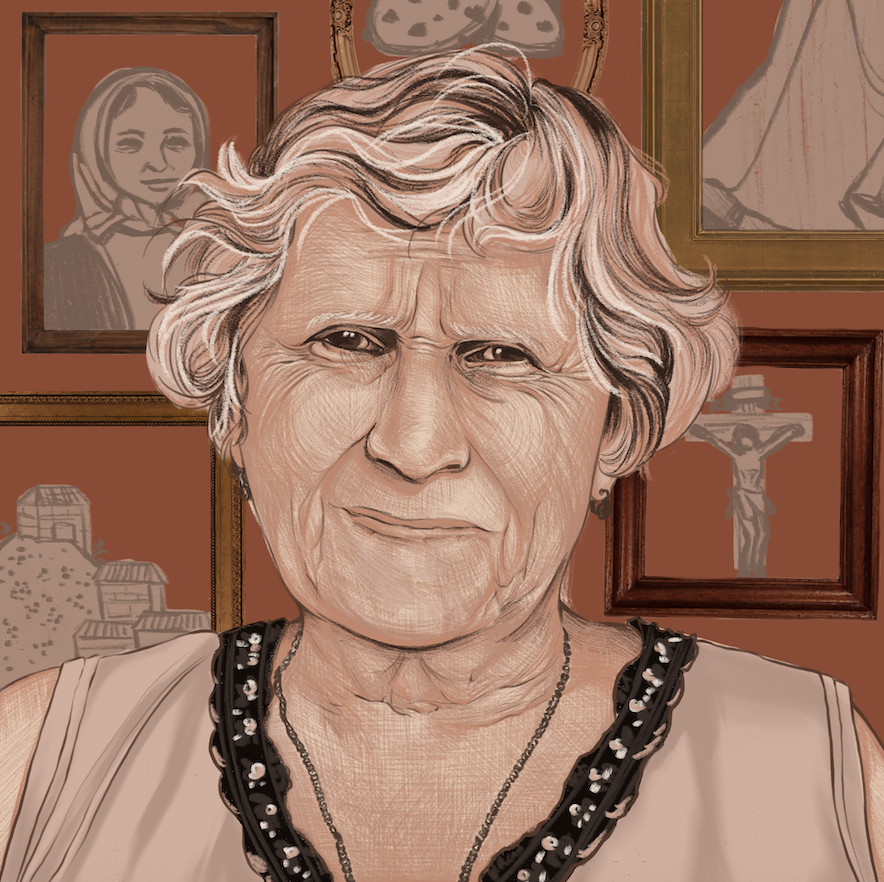
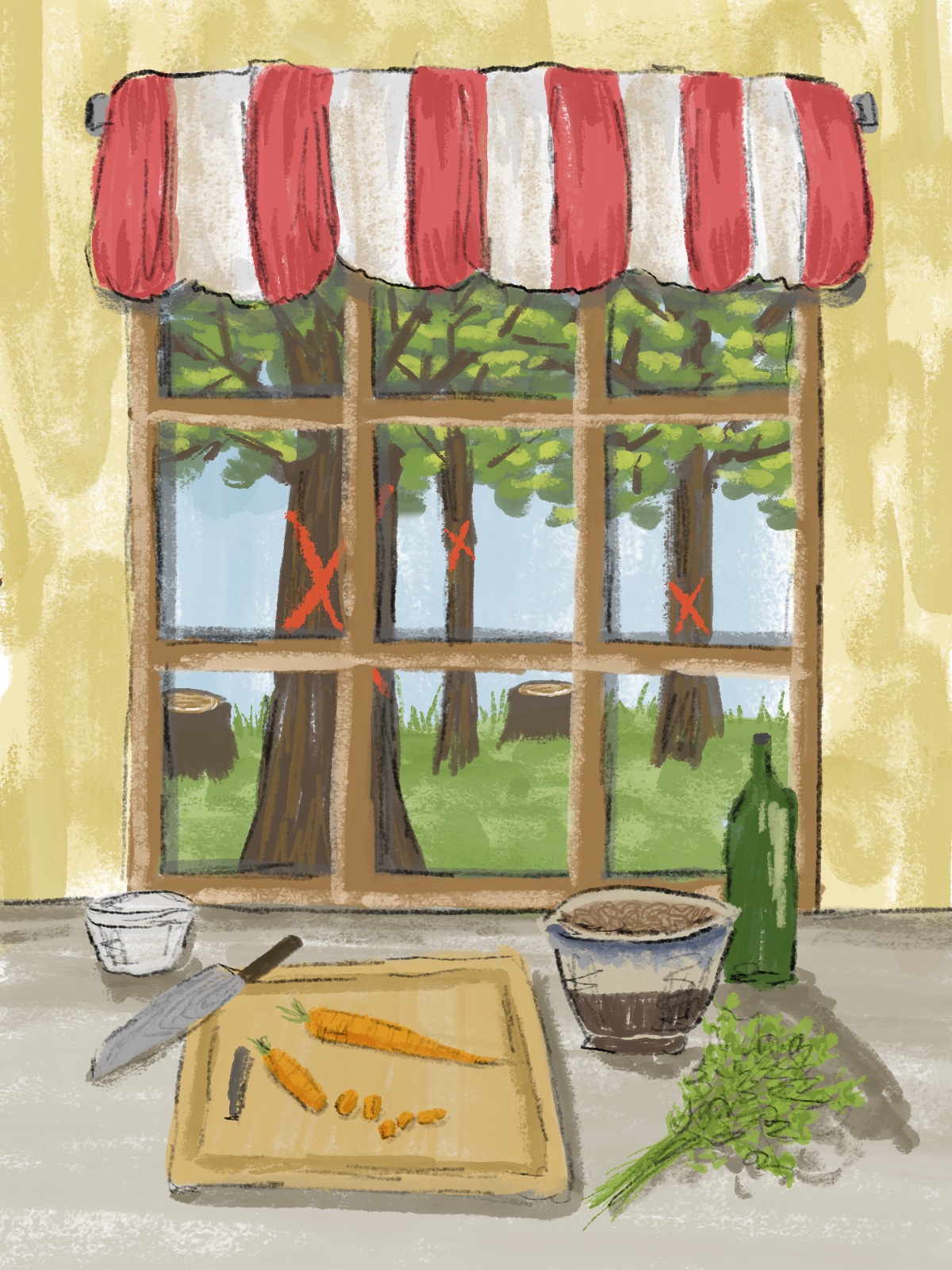
There’s a new fence in the yard where the trellis once kissed the ground, a padlock on the gate in the alley left by an admirer or a forgetful biker. The front door of the house is newly painted navy blue, but the latch still sticks. An assortment of sunscreen bottles, displaced from the back porch, live in the garage alongside the dead dog’s bed, which has been inherited by my parents’ new one. Sunscreen spread on skin, bug spray interrupted by the sound of barking. I throw the puppy a ball, and she runs around the periphery of the yard, still chasing something invisible long after she has caught it in her mouth. Once, we pitched a tent here, but the pea popped up beneath my back. The tent’s been lost for a decade now. Dirt on the lawn chairs, dirt under fingernails, plastic sacks of mulch stacked tall. A smear of Indiana soil on the back steps to be powerwashed come next year. Inside the house, hairballs nestle in the gap between the refrigerator and the linoleum. The countertop is home to packets of tuna, a plastic Brita pitcher covered in hard water film, recalled pistachios yet to be thrown away. On the wall hangs the prim calendar, which still reads “March” in June. On the floor, WD-40 and Clorox wipes share real estate with cans of wet food and salmon dog treats for brain health. I can hear the nettles rattling outside. They’re strewn along the berm so the puppy can’t romp without getting her short legs caught. Through the window, there’s the redbud that sprouted where the garden patch used to be, more tenacious than the tomatoes. It towers over the ghosts of withered vines, the home-farming love fest brief and barely remembered. There is honor in an intact ear, one without the cartilage pierced—my mother said so long ago. But is there honor in an ear that burns? Both of mine turn bright when someone’s grandma asks me if I’m single. She showed my picture to her son. Lucky that breathing fire with a closed mouth leaves the tongue’s flames extinguished. I smile and deflect, teeth thick with ash. Tomorrow, I will drive away, “Wide Open Spaces” on the stereo. No flat land precipice to fall from anymore. The voices haven’t changed. No new timbres, no unexpected inflections, only the occasional quiet indignity. My shadow informs the conversations. Hello to the teenage neighbor I babysat when she was three and I was 12. Hello to my best friend’s brother, who has forgotten my name. Hello to the photo of great-aunts Elaine and Madeline on the mantle. Goodbye to the swimming pool by my elementary school; I used to leap into the water again and again. Goodbye to the cornfield, razed to build a strip mall, and the strip mall, minced and bulldozed to make room for a high rise. Goodbye to the uncertainty that once roiled inside me in the neighborhood where I used to live. I’ve juiced every drop I can from this place. When I take a sip, I taste only the dregs. Two days ago, I boiled soba noodles and cut hot peppers and cilantro for lunch, snapping carrots in half as men sprayed the dead trees outside with red paint and ran the chainsaw. Today, the radio on the porch plays a couple seconds ahead of the one in the living room, the sponsorship message echoing as it sings: “Committed to building a more just, verdant, and peaceful world.”

A Barely Legal Guide to Seasonal Waitressing

On restaurant work and gender relations
October 31, 2025

During your first shift, you will be sentenced to folding silverware into napkins. A test to see if you’re cut out for repetition, the practice will soon become ritual. Take refuge in this menial task on days when your coworkers commit to telling and retelling their recent sexual escapades. There’s no earthly reason why you should know that your middle-aged boss has a penchant for older women. Innocently enough, a bartender at your restaurant may slip you gifts: kombucha, a work of bell hooks, a bracelet—your relationship will meander into allegory. Proceed with caution. When asked how he filled his day, the same bartender might tell you that he “sipped espresso, smoked a cigar, and watched a snail eat a leaf.” When retelling the story to your friends, you will have to insist through giggles that the quotation is direct. Don’t tell them the other things he said. If your manager is acting a little erratic today, he is likely on the come down from an unsavory adventure he took after closing last night. Watch for signs including an increased volume of arguments with the kitchen, palpitating eyelids, and a lowered physical inhibition. He will spill while clumsily showcasing how to pour a margarita with one hand, but beam at his tricks, and he may tip you out of the bartender’s pool. You have precisely one week to get in the good graces of the kitchen staff. Spark conversation in whatever broken Spanish you can eek out. Laugh at the jokes that translate awkwardly into English. Take pride when the head chef calls you “mija.” First uneasy at his kindness, you will soon determine his intentions unsullied. Soldier through incessant teasing along the lines of Hey, remember me? It is best practice to lie and nod. Apparently, the type of men who take their dates to upscale patio bars are also the type to flirt with their barely legal waitresses right in front of them. A hairball sensation will begin to fester in your gut, one that you will fight back into your esophagus when you laugh at his unfunny jokes and nod when he makes no sense. Don’t cough it up. The new 20-year-old chef may slyly pull you aside during rush and ask for a shot of tequila. You will for once find it pathetically endearing—the bartenders will not. He will be fired within three days, and you will feel inexplicably at fault. He wore star patches to cover his pimples, patterning his face with innocence. As the months progress, you will notice a disturbing, albeit useful, pattern. Some days you find yourself crunched for time, hair frizzed from bike rides and lake dips in the summer warmth. Other days, you will bask in the silence of your sun-spotted car—curls tamed, lips painted, cheeks expertly flushed. Take a moment to rehearse a well-placed smile in the rearview mirror. On these evenings, customers will be much more forgiving when the kitchen is running behind. Bat your eyelashes for an extra 5% and don’t think about Gloria Steinem. Whiskey, sugar, bitters, rock, twist. After countless slow hours spent leaning against the bar, you will learn through osmosis to make an Old Fashioned. Carajillo, Sex on the beach, Negroni, Lemon ball: your new party tricks. You never touched the bottle. You never crossed the line. You never would. As the paychecks roll in, guilt will thaw into acquiescence. Exhale your bitterness as the hairball in your stomach softens into the lining. You will exit the summer with an outlook half empty, but a wallet half full.

Buried Alive – Screams of a Stifled Voice

Ava Satterthwaite
October 23, 2025

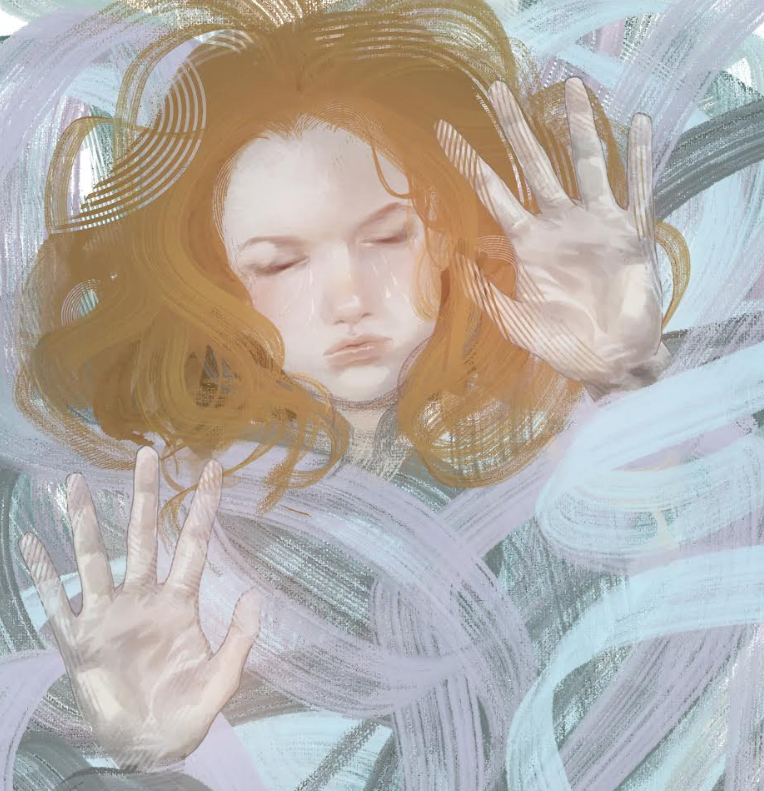
10:32 AM: drilling, grinding, sawdust coats my tongue. i am watching a film – a monochrome mouth moves in silence. a man shouts through the static, his words foreign, unintelligible. the reel flickers. barbed ribbons of cornflower blue obscure the scene, coiling around cranes and metal hooks, colliding with rubber-gloved hands, cutting between construction men in blue. is this show… interactive? i’m in the viewing room, on the table. back and forth and back again. 10:33 AM: the drill closes in. i am concrete: jaw locked, limbs tethered to the table. unable to move or breathe. unable to scream or flail or convince the construction men i am still alive. an entire orchestra of stars shine above me, humming a metallic shrill and showering me inan ostentatious sterilized haze. the conductor calls, “instruments sterilized… bone saw….” screeching. more shrilling. a sudden stabbing sensation, a teeming mouthful of metallic crimson. i flinch – this band sucks. i smack the cold leather below me; the curtains close on cue. 8:29 AM: “No allergies to medication? No food since 12 AM? OK, good… Well, I recommend a Vicodin waiver… She’ll have some soren— no? Fine. Insurance card, please.” I sink back into a tattered cloth chair, gaze fixed on a 1980s Wheel of Fortune rerun. Between Sajak’s comb-over, the wooden TV stand swelling with matted wires, and the stiff faux cactus in the corner, I feel like I've fallen into some neon-crazed, cobwebbed wrinkle of time. Mom offers the card and sits beside me, muttering under her breath as she scribbles a second, third, fourth signature on various forms. 8:47 AM: I take shallow breaths, clammy hands trembling as I scan the waiting room. Phrase: Five Words, 21 Letters W A _ I N G _ P F R O M A _ A D D R _ A M “Ava, come follow me.” How fitting. I walk toward the nurse and exhale as Sajak’s laugh and the dense smell of mildew dwindle into oblivion. Soon, I’ll be dreaming, then delirious with a mouthful of gauze. Soon – it’ll all be over. 9:00 AM: The door creaks. A man in starch white enters – his tall, refined frame harsh amid cartoonish bunnies and fields of flowers sketched on the walls. His smile is courteous, if stiff. “Morning, Ava. I hear you’re our wisdom teeth case today. Junior in high school?” Still scanning the sallow sunflowers behind him, I nod: “Yeah… starting college visits soon.” “Big milestone! License too, then?” He stretches into some latex gloves with such vehemence I wince. “Hopefully. I keep failing the parallel park.” “Ah, double freedom,” he retorts, voice now muffled behind a creased blue mask, “It’ll come.” I hesitate, then: “Um – one thing. I’m a natural redhead, and I read we sometimes need more anesthesia? I think I do, after all the cavities and root canals I’ve been half-numbed for.” I smile sheepishly, tracking cracks in the tiles beneath my swinging legs. “I don’t want to feel a thing.” More amused than concerned, he snickers; “You want the good stuff, huh? Don’t worry. You’ll be fine.” A feverish flush overtakes me, knuckles whitening as my fresh French manicure claws into the armrests. I purse my lips to nothing but the echo of crinkling paper and suffocating smell of antiseptic; the door slams before I can mumble another word. 9:05 AM: The room is heavier now – harsher. Even the fluorescent overheads seem fiercer, like electrified clouds infested with hail, enshrouded with an acute sense of dread. I half-expect the bunnies to flee the fields and burrow somewhere warmer, somewhere sheltered from the commotion. The storm brews swifter as I look down to two cold hands – mottled with bruises and blue veins like marble – still fastened to the vinyl-covered armchairs. I was Rose in Titanic: the bitter Atlantic circled on all sides, but by God, I would hold on to that drifting wood, that stiff vinyl. If this room was a hailstorm, these armrests were my wreckage: a connection to the concrete, to solid land – a lifeline averting an ocean of fear from swallowing me whole. “They’re professionals,” I reassure myself, “trained doctors who do this all the time. I’ll be OK.” I’d identified five items I could see (bunnies, sunflowers, Purell hand sanitizer mounted to the wall, some knives and hooks on a steel, cafeteria-esque dish – the scariest school lunch you’ve ever seen) and two of four items I could touch (the torn sleeves of an old, moth-eaten sweater and the vinyl film on the armrests, of course) when a nurse knocks. She heads for the Purell and asks for an arm. I feel a quick prick, intentionally averting my eyes from the needle to resume the senses’ ritual (two more items to touch… could I fiddle with the IV line? brush the ribbed adhesive at the insertion site? no, that’d be weird). She smiles, gaze flickering to my still-trembling hands, “This’ll calm you down a little, sweetie, OK?” I offer a grateful nod. 9:10 AM: 28. In five minutes, I’d watched the monitor sink from 102 to 83 to 65 (Goldilocks’ zone, breath looser and mind mellower) to the headache-inducing 40, mind-bending 34 (when the bunnies stirred and a breeze made the sunflowers dance – ears smothered in the sound of a million little teeth munching on grass), further and further down until 28 BPM. At 28, neon snow bathes the bunnies, the room an old screen obscured in static. I envision the cactus, the Wheel! of! Fortune! theme, a crinkled People magazine (June 2000 edition, Jennifer Aniston on the cover) and mourn the naiveté of 30 minutes earlier. The tiles teeter as the room tornadoes around me; I seize an armchair with such force the whole chair rocks. Screw Rose, I am Jack: watching myself drown from the hail-ridden clouds above. I sob in slow-motion as my frostbitten hands unfetter from the armrests – Jack’s wooden door unreachable. I am desolate. I am defenseless from fate. A handheld mirror lies slanted on the counter beside me. I search its reflection for what seems like hours. I search this ashen face I once knew for some shred of life – a sniffle of the nose, a curl of the mouth – but to no avail. For a second, I wonder if I’ll die in the smeared reflection: a finale akin only to Narcissus’. After all, 28 isn’t so far from flatlined. Then, 28 climbs back to 33, 34, 42, the sacred 65. I’m not sure what time it is now – or whether it’s been hours, weeks, decades, seconds. I sure as hell am not calmer, though. 9:12 AM: The nurse returns. I ask her the time, what’s in the IV, “will I be under soon?”, each word clear and well-articulated. She’s startled – horrified: this, apparently, was not the desired result. “Wow! I’ve never seen someone so lucid on Midazolam. I– I must’ve halved the dose somehow.” Before I can remind her I’m less reactive to sedatives – before I can tell that snobbish doctor I told you so – she rushes over. “Well, I guarantee this one will work. You’ll be knocked until it’s time for home and ice cream.” She hastily injects another needle, “Count from ten for me.” 10… 9… 8… 7…. Curtains close. A POST-OP REPORT: Recorded 10/02/2022, 11:51 AM EST Patient Ava J. Satterthwaite, 16F, experienced intraoperative awareness and partial temporary paralyzation during wisdom teeth extraction. At 10:32 AM, Dr. Smith [real name omitted] observed REM, increased heart rate, breathing rate, and sweating. Additional anesthesia was administered at 10:33 AM. Prior to operation, patient expressed concern of a potential need for additional anesthesia. Patient reacted unusually to pre-operative conscious sedation, appearing tense and alert rather than lethargic. Patient was administered a typical dose of anesthesia for her size and exhibited anticipated reaction in due time. There is no explanation as to why this dose was not effective throughout the procedure, but patient has not mentioned recollection of said episode – we do not intend to inform her or her mother, to ensure smooth mental recovery post-procedure. Patient exhibited minimal post-procedure reaction, displaying an immediate spatial awareness and producing well-articulated speech. Patient refused a wheelchair and walked to car without swaying or difficulty… indicating provided anesthetic dose may have been insufficient. Quick metabolization of anesthesia was recorded on her chart for future reference. NOV 05, 2022 | 3:02 AM: I am thrust awake, rattled for the third time this week with the acute sensation of suffocation. I feel smooth silk bedsheets crowded in clusters between my clammy hands and exhale. It’s 30℉ outside – bedroom window adorned in chromatic streaks of snowflakes and steam – but I am sweltered. A dense bead falls from my drenched forehead onto the satin. I drink water and stare into the darkness until my shallow breath has thickened. I’ve been buried alive. Again. This ritual started somewhere around mid-October. Initially, I attributed the nightmares to the stacks of wool and fleece and fur I practically drowned myself in every night. So, I switched to silk. For a week, I dozed under one thin linen blanket to the cadence of chattering teeth, waking still at 3AM, smothered, violently shivering. Sometime close to Halloween – when the evening’s installation featured a cornflower blue man and two matted bunnies – I connected the dots. I have lived in fear of doctors since: terrified to miss a stair, catch a cold, drink too much soda – terrified to live.

On MRI Machines, Cabinets, and Freshman Triples

Ina Ma
October 16, 2025

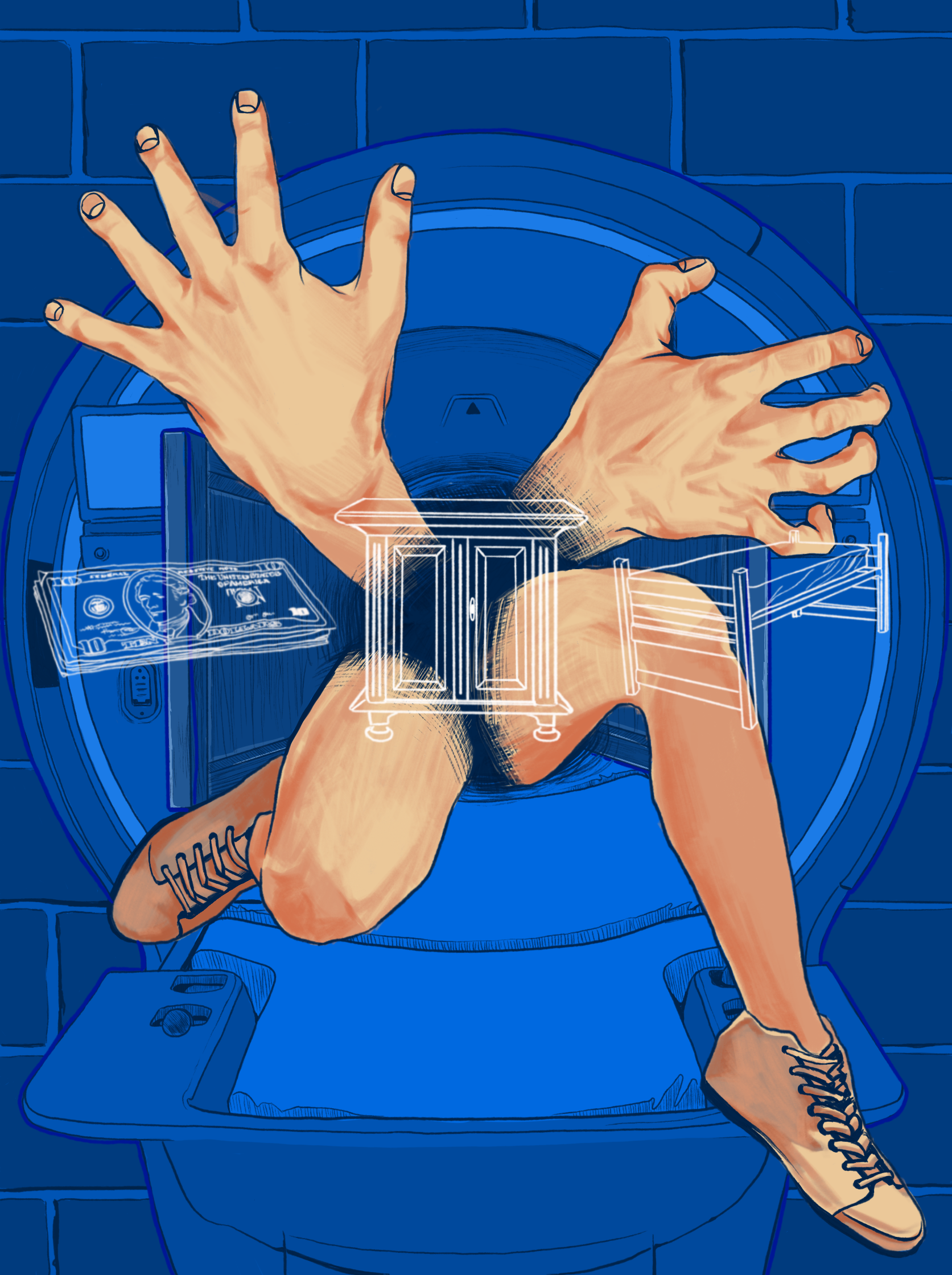
Things they don’t tell you about science: $110. They give you $110 for an MRI study. Or they do tell you, but only after you’ve read the newsletter and clicked the buttons and sent the emails, curious because you never had an MRI before. Then they tell you the magic number you will sell a few hours of your time for, to satiate your curiosity. You write about yourself in the email: 18 year old female, normal and corrected to vision, meets all requirements for the study, no issues, you are nothing less than perfect. Sidney E Frank Hall, opened in 2006, is a beautifully modern glass building that should be put on the front page of a brochure for Brown. The MRI Research Facility is in the basement of SFH, beneath the crushing weight of the five-story, 169,000-square-foot structure. You can touch the ceiling if you stand on your tippy toes. They will put you in an EEG cap and spend two hours gelling you up. They will press the metal nodes against your skull and it will teeter between pressure and pain. The gel gets inserted with a plastic syringe and forms an uncomfortable cool wetness between your hair and the cap. You may fall asleep between the methodical workings of two strangers. It is okay if you have a thin metal wire behind the rows of your teeth, permanently bonded to keep your teeth straight after two years of orthodontic treatment. It is okay if you forgot to mention it the first time they go over the screening questions because you will remember it the second time and your orthodontist will send them an email. The researcher says it is okay and your orthodontist says it is okay. You will still worry that the MRI machine will rip it out of your mouth with its magnetic force, and then your teeth will no longer be straight. The MRI machine is beautiful. She is sleek, white, and powerful, illuminated by a halo of soft yellow light. She thrums beneath your feet because she is alive, sending quiet reverberations running down your spine. The facade is ruined by a gray line of fraying duct tape running down the inner seam of the scanner. MRI immobilizers made of foam and gel slot you into place on the patient table. You feel like a mounted animal, ready to be stuffed and posed—the immobilized yellow perch screwed to driftwood, the paralyzed bluegill flush against his plaque. The patient table is thin and flimsy plastic quaking beneath you as you are mechanically moved into the all-encasing white of the scanner. They cover your body with a white sheet to keep you warm. You are a draped cadaver being slid into the mortuary cabinet. The. MRI. Tube. Is. Smaller. Than. It. Looks. They can taste your discomfort. They are kind. One offers to play a video of fish as they set up. You will watch the video of fish. The fish will swim when you cannot. You ask if you can be taken out between the assignments (no), if they can talk to you during the assignments (no), if you can wiggle your head a little (no). Once you are done with your silly questions, the machine will rumble to life. The song of the scanner swoops between pitches, high to low, beeping to booping. Between each bar the scanner shakes. You are lulled by the machine. Guilt. You aren’t supposed to be dozing off, but you are. Trapped between the sterile white walls of the scanner, your mind is the only thing that can spin, so you sleep to escape. You try to summon the comfort you found in small spaces as a child, squeezing into cabinets and sliding under the bed, but it doesn’t come to you. Don’t let the nausea overpower you. Click your button instead. Click. Click. Click. They will pull you out. You won’t be in there forever. You peel the EEG cap from your head. The gel will have begun to dry and crust on your scalp. You will be annoyed at having to wash it out later. In the moment you will only be able to feel the crashing waves of relief. It surprises you that what surprises you is they pay you in cash. You were expecting something digital, or at least a check. When was the last time you held so many crisp tens in your hand? You will take a nap afterward. about growing up: There exists a hexagonal wooden model a little less than 30 inches in all dimensions and of a deep walnut hue. You are young, so you are only two cabinets tall. The cabinet has a pair of inset wooden doors, each decorated with an ornate curved brass handle. The doors were engineered in such a manner that you can only open one from the outside and have to push the other open from the inside. It takes a tug—the cabinet resists. Online quotes of similar prototypes go up to $1,000, but knowing your parents and the timeline of cabinet acquisition, it was rescued off the side of the road or from a neighbor’s driveway yard sale. It is fun to play pretend. You meticulously move the vintage holiday mugs full of cables, discarded cardboard children’s books, and other miscellaneous items out of the cabinet. The cabinet is your den and you are a mother fox, the cabinet is a mountaintop cave and you are a dragonet, the cabinet is safe and crushing comfort. Slowly, the cabinet will shrink and the space between your skin and its walls will grow smaller. One day, you realize you cannot fit in the cabinet at all. You are hit with a feeling of loss but you do not know what you are missing. about dorms: Some triples are 537 square feet. Some triples are 259 square feet. Some triples have the floor’s electrical closet jutting into the room, making the narrowest part of the room 38 inches wide. Just enough to slot a twin XL mattress. Some triples are too small for three people. Once you move into your dorm, it will be even smaller than before. Your things seem to inch forward, taking up more room until you periodically push them back into place. They are crowding for more space, your space, so you will have to fight for it, shoving clothes into wooden dressers and memorabilia into plastic gallon bins. When you lie on your 38 by 80 inch twin XL at night, you imagine you can feel the walls of the room move to the breaths of your roommates. Your bed is pushed flush against the wall and the wall pushes back—no matter the season, the painted cinder block is strangely chalky and clammy to the touch. You imagine the wall is sweating. Your third roommate moves out. Somehow, the room feels larger and smaller than before. Her part of the room is crossed off with an imaginary line and when you step over, you can feel the oxygen atoms that long exited her lungs rattle around yours. There is nothing left but bare matress and uncovered tabletop. She had the narrowest part of the room. Maybe that’s why she left. The ceiling is stooped so that if you sit on the bed and stretch your spine, you can brush the roof with your fingertips. Neither the overhead fluorescent lighting nor the narrow windows can reach into the dark corner. about all of the above: Forget. Spend the $110, move the cabinet to the garage, pack your things and relocate. Forget the jarring roar of the scanner, the feeling of wood grain against your skin, the sweaty cinder block walls. Fact: you will continue to be forced into spaces too small for comfort. You will never stop growing out of your safe spaces. Every refuge is temporary. Grit your teeth, claw your way out, turn the four alien walls into your home. When trapped, learn to recognize when you should muster courage to stomach the discomfort and when to force the space to fit you. Understand when to move on, and you will burst out of the wooden cabinet that can no longer contain yourself.

Magic: A Sole Collection

Maison Teixeira, Sia Han, Desi Silverman-Joseph, Ina Ma, Luca Raffa, Juliet Corwin, and Annabelle Stableford
May 28, 2025

The fourth edition of our Collections series asks our staff writers to interpret the word “magic,” and all the memories, postulations, and emotions that come with it. From childhood wishes to peeling clementines to the process of illustration and design, our writers probe deep into their schema and produce exciting perspectives on the magical elements within our world. Porku - Maison Teixeira The small island of Brava goes completely dark every midnight, when the government shuts off all the island’s electricity—street lights, lamps, TVs and all. Ne walks home from work and checks his watch—it’s 11:57 PM. He starts to run, but doesn’t make it home before the lights go out on Brava. Luckily, the moonlight is just bright enough to see his path home. Ne keeps running, whizzing by the houses, trees, and bushes in his small, rural town. Then, out of the bushes bursts a PIG, fat enough to roast over a fire, followed by her six stumbling piglets. The mother pig hisses at Ne. He breaks into a sprint, then turns around to find the mother pig galloping behind him, her six piglets in tow. Ne tries to sprint faster, but the pigs always manage to catch up. Stopping to catch his breath at a tree, Ne has an idea. He grabs a branch from the tree and whips around to face his pursuers, striking them with his newfound weapon of choice. The pigs return to the woods, limping and whimpering. Ne 1, pigs 0. *** The sun shines over Brava. Ne walks the same path where his fateful standoff against the swines had taken place a few days prior. On the path is a lady who is followed by her six children. The lady has a sling on her arm, and her kids limp behind her on crutches. “What happened to you?” Ne asks her. She glares at him angrily and walks away, her kids trembling in fear as they stare back at him. Clementines - Sia Han I’m really good at peeling clementines. By good, I mean I can peel one in under 10 seconds and all the way around so all you’re left with is one long, winding spiral of peel. How do I do it? Well, first, get a good grip: dig in your thumbnail and carve out a circle around the little green knob. Make sure it’s wide enough, ’cause if your starting point is too thin, it'll tear. And to be as efficient as possible, peel using the blunt side of your thumb at a 45° angle as you turn the clementine in the other hand. To let you in on a secret though, I didn’t peel my own clementines until I was 15. I hated the way strips of peel and pith would lodge themselves into the crevices beneath my nails, how the smell would stain the tips of my fingers and linger all day. So I always got my mom to do it for me. It was like magic, how with one touch she could tell how ripe a clementine was and how, if she thought it was too sour for my liking, she’d wordlessly put it aside to search through the bag for a better one. How her thumb always seemed to know exactly how deep to dig before piercing skin, her thumbnail reemerging slightly yellow, stained by pith. And how she’d roll it, peel-pith-patches and all, back in one, endless, graceful brush of the hand. I’d watch, fascinated and wary. She complains to me now that her nails have lost the pinkish tint and slight curvature of mine, now yellow, opaque, and flat. It’s like someone squeezed each nail so hard, the edges have lifted and the color has been wrung out like a wet towel. I think I could reach over and just peel one off. Today I peeled a clementine. The skin was very thick, but it was okay because I cut my nails last night. And it ended up breaking three-fourths of the way done, but it was okay because the second piece kinda looked like Brazil. I shared halves with my mom and a bit of juice dripped down my palm, which I licked off. It tasted sweet and bright and good. Habits - Desi Silverman-Joseph Magical thinking. That’s what I heard it’s called. The twelve times I must jump and touch the ceiling when I get ready in the morning. The need to throw my socks onto the bed without them bouncing off before I put them on. The fact that I must put on my left shoe before my right, wipe my butt with certain hands in a certain order, soap up my body from bottom to top in the shower (yes, I know it’s gross). The way I cannot fall asleep without first cracking my back—folding my left leg ninety degrees over the right before reversing this position. It’s the doom I feel if I were to abandon these rituals. The slope between routine and superstition is slick as ice. What starts as an arbitrary habit to make a task automatic or avoid a decision can cement into a terrifying rigidity of mind—into a need that feels as vital as drinking water. What would happen if I forsook the twelve jumps or the sock game? If I put my shoes on right to left, soaped my body top-down like a normal person, violated the rulebook for wiping my ass? Lord, spare me from finding out. The stitches which hold the world together would surely disintegrate, the dams would burst, my downfall would be all but ensured. So please, let me work my magic. Hat Trick - Ina Ma I operate in extremes. It’s unsettling, to sit down with the midday sun hanging high in the sky then blink and find her setting, leaving me behind in the dust because I squandered the afternoon doodling. On other days, I can’t bring myself to open my drawing program lest the sight of the white and gray user interface makes me physically nauseous. The ability to create is as supernatural as any magic. Art is my magic, with shaky/uneven lines and disproportionate anatomy, but my magic. If I am a magician, then digital art is my hocus pocus. Like pulling a rabbit out of a hat, this is a trick I’ve done a thousand times before as my fingers slip over the keyboard, stabilizing lines, gradients, and fill buckets. When the rabbit listens, my flesh does not bind me. The nerves between mind and body are severed, gnawed through, no longer sending the signals requesting sustenance or rest. Every function within my body is working in tandem, synced in stable equilibrium solely to create. Hours are carved out of my day, waking up at five or retiring past midnight, skipping meals and events, to satiate the smoldering desire. I am only brought back to my body when the mental barrier is no longer strong enough to withstand the barrage of physical pain: bleary sight, deep aching in my back, an ominous pain in my wrist that says “impending carpal tunnel.” But sometimes, the rabbit grabs you by the ears. After these bouts of obsessivity, it spurns the suggestion of illustration, thumping its foot in my stomach at any hint of creative effort. It is a motion sickness where the motion is the firing of neurons in my brain. I have a playlist of songs that I would play on loop for hours on end for forays into animation, songs that I do not allow myself to listen to casually, in case the rabbit’s ears catch wind and it comes for me with disparaging rage, twisting knots in my abdomen. At the end of the day, I lure the rabbit back, not with a personal desire to draw or looming deadlines, but with gentle touch and promise of carrots and rest. As much as it wishes it could, the rabbit does not exist without me. It cooperates, and the cycle begins anew. Magari - Luca Raffa I dreamt about a prior life, a life I would not have merely existed in--a life I would have instead lived. I would probably be a peasant picking pears or peaches all day in the orchards; the limoncello sun would pinch me alive with the ripeness of passion and pride, and I would suckle the sweetness of life like the flesh of a persimmon, though my shadow might be my only companion. Or I might be nu piscaturi alone in the water, my golden face rough against the salty winds. I would whistle a charming melody about the fish that could fly across the uncertain sea. I would be as certain as the sun. Then I met you. I woke up, and your eyes appeared like the shallow turquoise waters I saw in my dreams and your hair appeared as soft as those peaches glistening in that sun. You make me see fish flying in the deep blueness of the sky, make my passion turn sour and my pride become mouldy. You make me want to dance to your drunken melody and nourish this helpless feeling. You make me ask God: “what do you call this magic? Love or Foolishness?”. For it is as perfect as lemon blossoms in the springtime. I Believe in Magic - Juliet Corwin When I say I believe in magic I mean I believe in evolution. I believe in growing out of our pasts, that we do not know how to stay still, that we build ourselves along the way. When I say I believe in magic I mean I believe in hands. I believe in skin, that we can touch in a way that does not hurt, that palms can hold all of this life. When I say I believe in magic I mean I believe in dancing. I believe in moving with our heartbeats, that we all have a bit of rhythm aching in our chests. When I say I believe in magic I mean I believe in scars. I believe in healing our wounds, even quietly, that we can create shields out of air. When I say I believe in magic I mean I believe in the big bang. I believe we are explosions, that we are made of stardust, that there is a drop of sunshine in each of us. When I say I believe in magic I mean I believe in sweat. I believe in salt, that we all can glisten, that we can melt and glide and shine. When I say I believe in magic I mean I believe in neurons. I believe that we are electric, firing across synapses, that we create our own sparks. When I say I believe in magic I mean I believe in ladybugs. I believe in wishes, that we make them just in case, and who’s to say they don’t come true after we’ve forgotten them? When I say I believe in magic I mean I believe in wombs. I believe in cradling close, that nests can be made of scraps, that we all learn a way of coming home. Desert Magic - Annabelle Stableford “Avada Kedavra!” Snape yelled, lunging out from behind the sandstone boulder. His black cape swirled in the red dust. Lupin, Ginny, and Hermione froze. The sky was a special kind of blue over the orange cliffs; the sand stung in their nostrils and watered their eyes; they did not know which of them had died. “No—wait—you can’t say that, it’s unforgivable,” I said, dropping Hermione’s accent to make sure my brother Sam, playing Snape, got the message. “Fine, but I’m still evil right now, okay?” Sam said. We all agreed, then kicked our feet in the dry sand as we wondered how to recover from our break in character. “Let’s go to Gringotts,” said Ginny, played by our family friend Liza. “I have a deposit to make.” Lupin, played by Liza’s brother Misha, jumped in: “I’ve heard rumors of a security breach. Keep your guards up.” Hermione, Ginny, and Lupin brandished their desert sticks as they turned to the pock-marked boulders, perfect for stashing gold deposits in. “Wait—and then how ‘bout I’m waiting there to attack,” Sam said. “And then how ‘bout I turn into a werewolf because it’s a full moon,” Misha replied. “And then how ‘bout you chase me and I have to retreat.” We “and then how ‘bout-ed” our way to our favorite boulder with large cubby-holes indented in the rock, where we took our places. As Ginny, Hermione, and Lupin deposited gold, Snape jumped out from behind a rock and yelled, “stupify!” Hermione fell back against the boulder, Ginny cast “expelliarmus!”, then all hell broke loose. Wands exploded, capes billowed in the wind, the battle raged. Darkness soon fell on the land of magic. Our shoes filled with sand and debris from the twiggy brush and our throats ached for water, but Hermione, Ginny, Lupin, and Snape carried on, riveted with adrenaline. As Lupin began writhing in the emerging wash of moonlight, a group of climbers walked down the path, heavy bags of rope and gear shouldered on their backs. They stared at us—our Crocs, our scraped skin, the sticks we clutched to our chests, the way we swished at cloaks they could not see. We took no notice, purposefully ignoring the amused glances the climbers exchanged with each other. “Muggles,” Ginny whispered to Hermione with an eye roll. They would never understand.
Goodbye

Luca Raffa
May 21, 2025

August/ September 2015 Although the nervous sweat evaporated from my skin in the high August afternoon, the driving sting of my salty fear still remained. The heat burnt me like it did the bitter grass in the fields—rusting under the merciless, almighty sun. On the eve of September, the rattling sighs of crickets hiding in the fields welcomed me; the crickets sang about death so beautifully. Amongst the fields, there it was: this cluster of white buildings, which appeared to me like castles. I walked towards the building with the golden bell, bright as freedom—it could almost be confused with the sun. The green doors of hope opened, and a man stood to greet me. His smile was big. He shook my weak hand: a firm, practiced grip. As our hands fell to our sides, his rolled up sleeves exposed the hair that grew wildly on his arms. He wore a blue dress shirt that erupted with sour sweat all over, tucked into a new pair of khaki pants and cinched by a leather belt to keep his belly in. Like me, I learned that Mr. Bates was new to this school. And at least that was something we could share. That September, Mr. Bates taught me and my boisterous peers how to greet one another. Give them your eyes. Give them your hands. Give them your words. I rehearsed over and over and over again until I had memorized this perfect display of human decency. Mr. Bates was teaching me how to navigate the spectacle of human interaction. He was teaching me how to belong in this world. * October/ November 2016 A layer of frost crusted the fresh decay of leaves that, by the evening, would continue to rot in the late October mist. The wind in the dark was nightmarish. It brought shivers to the trees, whose sick leaves would slowly dance to the ground, awaiting the night’s nip of winter. Like the trees I often trembled, alone in the dark and blind with nervousness. Stumbling up stairs, I would enter a bright room fresh with the rousing exuberance of youths I did not know. On opposite sides of the ballroom, the boys in their blue suits pretended to be men while the girls glistened in a resplendent rainbow of dresses. This was etiquette class. I learned how to waltz. The stiff clutch of my tie eased when I finally managed to approach a girl to dance during the first lesson. The question, sinking in my throat, at last burst forth frantically. My eagerness became our awkward foxtrot. She wore a taut black dress that complimented her smoothe, dark hair. Below her soft and secretive eyes, her face was scattered with rosette freckles all over. She leapt like a leopard into the night, forever disappearing from me––nameless. Each week, I danced with a new girl. I practiced introducing myself respectfully, meeting her elegant eyes, shaking her hand gracefully, moving my feet, touching my left hand to her shoulder, touching my right hand to her hip, swaying, dazzling. * December/ January 2017 At dawn, the dim glow of the moon was fleeting, the stars fading. The soft snow slept on the driveway like the powdered sugar that dusted my breakfast. The avenue was still, and everyone was inside still asleep. The wind yawned, releasing a sweet puff of life that wandered freely. The sun kissed its warmth on my neck. The cold embraced me too. At Christmastime, my family would drive ten hours to visit my grandmother. She was a round woman with a bullous nose, sharp eyebrows, and defiant eyes. She would summon me and my brother with a sputtering yell––boys, the food is ready––her way of saying that she loved us. The suitcases huddled ready in the shut trunk. The muffled sighs of the car and the blue fumes rising upward became one with the cool winter sky. The icicles stuck to the edges of the undercarriage melted into a puddle of slush black as charcoal. The car’s fresh leather seats were warm, causing the frost on my window to melt away and reveal the figure of my grandmother, small and motionless in the frame of the door, watching us leave. She was waiting for our promise to return again. Goodbye. *** In our youth, we are taught how to greet one another. It is an act of maturity, an act of integration into the world, an act of becoming. We learn to be actors who play our parts with projected voices and firm, dramatic motions. Our masks and costumes are charming. We follow the script.We perform ourselves. Yet no one ever teaches us how to say goodbye. Perhaps, letting go must be a truth then: a testament to our character, to our love, to the depth of our souls. We do not need to go to school or to ballroom dancing to learn how to say goodbye. It already glows in our hearts. Ultimately, life is an act of letting go. It is standing alone in the open doorway, the cold creeping inside, and silently watching those you love leave for new adventures. It is welcoming the uncertainty of when you will see that person again. It is the comforting pain of their absence, and the sweetness of your longing. It is the fateful pleasure of the unknown.

Paranoid in Detroit: A Retrospective Airport Guide

Elsa Eastwood
April 28, 2025

In the beginning, Delta Airlines created a 10am flight to Los Angeles, and I arrived early at my gate, enveloped in a net of peace, anticipating a night in my childhood bed back home, and the sun rose over Providence. But then the Intercom said, “Let there be a $1,500 airline voucher for any travelers willing to transfer to the 5pm to Los Angeles through Detroit,” and I awoke. Too good to be true? Perhaps. This morning would mark only the beginning of my chaotic pilgrimage. Here’s what I wish I had been told: Accept the voucher, but know what you’re getting into. Don’t lose yourself in visions of a restful Christmas vacation—you must first earn it. Your new flight is in nine hours. Text your dad: no longer getting home today, sorry. Listen to the charismatic British-Canadian rugby player you meet at the gate when he informs you that no one wins anything by standing patiently in line. Muscle your way to the front for your updated boarding pass. Find creative ways to pass the time while you wait. Stare at the stretches of gray carpet, the seas of hurried bodies. Treat yourself to a $16.50 meatball sandwich, which will inevitably taste like wet cardboard. Find a nook and doom-scroll into oblivion as time crawls, turtle-like, past you. Apologize to the universe for cursing the droning intercom voice that announces each delay. Airport attendants have dreams and families. Attempt to restore your karma. Once finally on board, strike up a conversation with the young, bearded Amazon employee in the neighboring seat. He may buy you a small bottle of airplane bourbon and confess to you his aviophobia. Comfort him, but know you’ll be on the tarmac for another three hours and that he’ll be drunk enough by then not to notice he’s airborne anyway. When your phone informs you midair that your connection out of Detroit has already departed, accept the truth: no airport sprint nor desperate plea will get you home today. And don’t say you hate Detroit. It doesn't want you there either. After you land, an agitated agent at a Delta “Help” desk will claim she can’t rebook your flight or help you find a place to sleep. Ignore her. Get a second opinion and an off-the-freeway motel voucher. Don’t talk to irritable strangers at 1am on the airport shuttle en route to said off-the-freeway motel. Hop across the lily-pad stains on the lobby carpet to lighten the mood. On the way to your room, try not to picture bodies in a range of consciousness behind each door or an eerie solo violin accompanying you down the hallway. If you must, have a makeshift weapon ready. You’ll hear water running when you enter. The bathtub is full, the faucet stuck. Estimate how long you have before a flood consumes the room. Futz with the thermostat to no avail. 30°. Nice work. You’re sleeping in your clothes. Never rely on a fatigued and hungry mind. There is no skeleton hand on your pillow, no gelatinous tentacles emerging from beneath the bed. That languid, naked woman on the windowsill? A trick of the light. (Deadbolt the door twice.) Sacrifice your vigilance for some shivery sleep. Imagine yourself somewhere more forgiving—the dentist’s office or DMV waiting room, the kitchenware aisle of a suburban IKEA. Wake up to a 5am alarm. Brave the snowstorm, the lonely motel muffin, the shuttle back to the airport. Drag your bag the final few yards. And once you’ve collapsed into your seat and let your eyes fall closed, find solace in the Los Angeles skyline appearing against the darkness of your eyelids, the weight of a new $1,500 in your pocket, as the plane wheels roll steadily forward.

Language Undone

Juliet Corwin
April 15, 2025

I was born in silence. In the first year of my life, my hands and my face were my only ways of communication. My curiosity was not limited by a lack of sound, and as an infant I absorbed the colors, shapes, textures, tastes, smells, and vibrations all around me. I spent much of my time on the floor—in part because walking is a skill that takes practice, but also because lying on the floor is the best way to experience the world. Through the floor, my body learned to recognize my father’s footsteps, a closing door, my sister’s excited hops, the calm ring of my mother’s laugh. I learned the different meanings of eyebrow and lip movements, which twitches meant worry and which meant laughter. My parents, both hearing, spoke endlessly to me, pressing my hands to their throats so I could feel the changes in pitch, the pauses in their words. I remember the warmth of their skin, the steady hum of their voices against my palms. They picked up elementary signs to teach me, pairing them as best they could with the words streaming from their mouths. My first signed word was “shoes,” two fists knocking together—sometimes I wonder if this wasn’t just an accidental bump of my knuckles. My pudgy fingers learned to fly. Soon my words soared through the air, my sentences sprouting wings, flying higher than my parents’ unpracticed eyes and hands could reach. But Mmy parents made the decision to raise me with hearing technology in the hearing world. This was by no means an easy choice, but the world has not been a kind place to Deaf people, and has been particularly unkind to Deaf women. My parents wanted their daughter to be safe, to be autonomous, to feel that this life was mine to create. *** I was one year old the first time a surgeon drilled into my skull. In a cochlear implant surgery, a small area of the skull is shaved away to create an indent in the shape of a tiny upside-down snowman, an exact match to the internal magnet which is placed in the indentation and cemented in with bone paste. Attached to the magnet is a string of electrodes, which are wound around the cochlea in place of cilia, the tiny hairs along which soundwaves dance to the brain. As a result of a recessive gene, GJB2 Connexin 26, my cochleas cannot receive sound properly. The cilia that transmit waves to my brain are absent, broken, bent, or lonely. Through two surgical procedures for cochlear implants, my cilia were replaced by electrodes spun through the spirals of my cochleas, which now receive electrical signals from an external processor. This leaves the bones in my ears without a job. I hope they are not too bored. There are three bones in each ear, named for a hammer, anvil, and stirrup. They bring vibrations from the eardrum to the inner ear by turning them into waves that can travel through the membrane and fluid of the inner ear. Their main function is to bring sound to the cochlea, which connects to the brain. The bones in my ears, dedicated to connecting my eardrums to my cochleas, must be very confused. Soon after getting hearing technology, my preschool teachers held my hands in my lap and I was taught to speak using only my mouth. For Deaf children that are turned into deaf children—assimilated into the hearing world through the use of hearing technology and verbal language—there is debate around continued use of sign language. Some believe that a focus should only be placed on spoken language, as it is assumed that young children will default to sign language if given the opportunity to use it freely. The first time a scalpel graced my skin it un-capitalized a letter, grazed my not-yet formed identity. The second time a scalpel stroked my flesh it cut away a language in my fingers. *** The human hands generally consist of twenty-seven bones each. Eight carpal bones, formed in a row between the wrist and the palm, five metacarpal bones reaching up to the fourteen phalanges that hide in the fingers. These bones are carefully situated so that the hand is flexible and can rotate freely. Two sets of twenty-seven bones working in tandem are used in nearly every human activity. My two sets of twenty-seven bones grew wings, flew too close to the sun, and were left stunted and slow. In my oralist early-intervention education program, my hands were not free. My eyes were trained to read lips and to maintain eye contact at the same time. I still rely on lips about thirty percent of the time, and more in poor acoustics. Reading lips is a skill that I tire of sometimes. Each person, regardless of their language, moves their lips and shapes their sounds differently. Each person I meet means a new pair of lips to learn. As a toddler I was presented with posters and books of cartoon faces squeezed into scary expressions, rewarded with smiles and cheers when I spoke and left my hands behind. Every year since I was one, I have been led into listening booths and told to repeat the words coming at me through a speaker until the heavy, sound-proofed door opens again. This process typically takes about three hours in total, and leaves me exhausted and drained for the next two days. I often grow increasingly tired as the tests go on, and I begin responding to beeps that haven’t played or saying nonsense words back to the speaker. *** I’ve always found it difficult to speak up. I’m not sure how much of this is due to being a deaf woman. I don’t trust my mouth to make the correct sounds. I am scared to take up space in the hearing world, terrified of what it may mean to remind those around me of my disability, of my constant accommodation of their language and lifestyle. Sometimes, a word will slip out of my lips coated in the Deaf accent I still sneak back into at night, and I will pray it goes unnoticed. I grew up being complimented on my clear language, on how invisible my disability was. My preschool classroom was a praise paradise, so I fell in love with hiding this part of myself. I was good at it, and even at that young age I understood that in order to succeed, hearing was the best thing I could be. I used to dream of waking up to noises instead of light. From a young age I knew I was supposed to speak up when I needed more. I was taught to advocate for myself, to explain my disability and to demand accommodations from reluctant ears and swatting dismissals. I was never taught how to say no to a man who was determined. I didn’t know how to run away from someone who showed me affection, even when he became an aggressor, attacked me in a way that seemed far too easy and familiar. Eighty-three percent of disabled women are sexually assaulted in their lives. I had watched a boy turn into a predator, naively believing that I didn’t make for easy prey. I fell into the hands of a boy on the hunt and found myself helpless. In all my training of how to gracefully need more, I hadn’t been taught when to walk away. Under his grip, my hands forgot how to fight as quickly as they forgot their first language, lay limp by my sides the way they were trained to. My protest, rough against my lips, lay in the air and settled along the dust on my cheek, pressed to the floor. *** When I was nineteen, a pulsing tattoo gun scraped along my right hip. A black-ink fine-line daffodil. I was in Minnesota, fighting to keep my body with me. I was a few months into my first year of college, in denial about the flashbacks that kept me awake and the nausea I couldn’t push down when I kissed new people. I told myself he couldn’t follow me here, told myself that was enough, and called my new ink a sign of how healed I was. Daffodils represent forgiveness and rebirth. A type of starting over that accepts the past. I was trying hard to be a daffodil. I wanted to be a flower, open and bright, standing tall on my stem. I wanted to cover up the handprints I felt along my hip with petals and leaves. The artist was rude, which felt unfair since she was dragging a needle through my skin. She started the appointment an hour late, glared at me when I presented a sketch of what I hoped the flower would look like, and silently drew her own version instead. Hers was much better than mine, and I quickly admired the purple outline along my skin before settling in for the session. She didn’t ask me what the tattoo meant, just told me to sit still. At one point she asked me, annoyed, if I was holding my breath. I was. Over the years I have collected more ink, sprinkled over me in whispers. Behind my ear hides a black-ink fine-line outline of the sun. My earliest memories are silent and bright. Fuzzy rays of warmth, dust floating and illuminated in front of a glowing window. The few mornings that I am left to wake without an alarm, I open my eyes to a shift in the light. The first moments of the day are my tired blinks and the beckoning brightness.

House Home

Anonymous
April 12, 2025

House, Home I would sleep in the woods every night if I could. To the times when the morning sun's motherly warmth caressed my face, which peeked out from the top of my sleeping bag. My eyes opened slightly as my ears were entranced by the Mountain Chickadee’s singsong tune somersaulting through the forest, and I threw on my jacket to combat the crisp mountain air. Unzipping the tent, my lungs filled with the purity of pine and burning logs coming from the small fire my father was nursing to warm up frigid backpacking hands. Later I spun around in a circle and pointed to the highest mountain peak I could see, stating that we must reach the top. Leaving the campsite we climbed higher and higher into the thick Evergreen forest; jumping through boulder fields and laughing our way to the summit where the sky was unlimited and all ours. We did snow angels in the July leftovers that we supposed stayed unmelted for the sole purpose of our moment above the clouds. As the sun began to tire and drop from the middle of the sky, we found a lake fed by waterfalls, gurgling pools twirling down a snow melt stream. There was a rock near the center of the lake and we knew that we had to swim to it. My mother smiled as she took out her camera and 1, 2, 3, we grabbed each other's hands and jumped. Our bodies paralyzed with the shocking cold, we gulped for air as instinct and adrenaline propelled us further and further away from the safety of dry land. We reached the rock and flopped down, soaking up the sunshine’s radiating warmth. Our hearts beat raw against our chests, our skin painted with goosebumps and mud. We wondered if any other humans had stepped onto this rock island deep in the Rocky Mountains or if we were the first ones. Our own little palace. Our own little world. One where we could write the rules. All ours. +++ She stood outside, her backpack coated with a layer of dirt and twigs that had decided that her pack was a much more sensible home than the mountain trail she had hiked alone earlier that day. Her head rested on the wall of the house behind her and she traced her fingers across the bricks, feeling the peaceful protection of where she had been break into leftover memories drowning in the corners of her mind. Her heart quickened in anticipation and she counted to ten before turning around, taking one final deep breath, and sliding open the side door of the house. The screaming echoed off the panes of the windows and she felt her fists tighten until her knuckles turned white. She hesitated slightly, eyes glued to the floor, before forcing herself to go inside the house. Mom, Dad? Go to your room. +++ In elementary school, my class would go camping in the mountains twice a year. I would pack my sleeping bag, sleeping pad, extra clothes, and a backpack, a daypack as we would call it. It was filled to the brim with everything you would ever need for any kind of mountain weather: sunscreen, a rain jacket, a fleece, gloves, a camelback, a sun hat, a winter hat, rain pants, snacks, and sunglasses. I would wait by the door of my house jumping up and down in excitement until I was taken to school. We went rafting down the Colorado River, biking through the red crushed arches of Moab, and backpacking in the Rocky Mountains. Returning with my face covered in mud and a head packed full of stories that would sooner than later turn into dreams. +++ She got to her room and shut the door softly, hoping her parents would forget that she was there at all. Looking up at the ceiling, the lights appeared to twinkle through the tears flooding her eyes, though without the comfort of the stars that blanket the mountain’s night sky. The walls of her room reverberated with the growing terror in her heart as she shoved a pillow over her ears to muffle the repeated sounds of strikes echoing through the kitchen. She wanted nothing more than to go but was too scared to move, sickened with the hope that her mother’s rampage would end before it was turned towards her as it so often was. That one day, the yelling and pain and tears would stop and her house could become a home. +++ Why are you in the woods? My friend texted me and I turned my phone away from my face, replaced instead with the dark sky and steadfast trees. I marveled at the fact that I somehow always ended up here. As if my feet carry me to safety if my mind starts to flood too deep into sinking swirls. Tears rolled down my face and I used the cuff of my shirt to wipe them away, softly accompanied by a lullaby conducted by the echoes of the trees. Because when you are in the woods, what does real life really mean anyways? Back to the primitive being of true humanity. Finding food and water and wood to stay alive. Telling stories you would never think to share if your mind wasn’t given the opportunity to wonder. Where the natures dance becomes your family and the trees your home. Please let me come. You are not a burden. Okay. And so he ran down to the edge of the woods and together we lay side by side, the stillness between us holding more than words ever could, the smell of moist wood and falling leaves lulling us into a safe security that tomorrow could never bring. +++ Sometimes she doesn't sleep in a tent but opts instead to sleep outside under the stars. The quiet surrounding her is a safe embrace as if nothing can hurt her as long as stay within the limits of the trees. Because no one is angry in the mountains. +++ In the woods I am home.

Inheritance

Deeya Prakash
April 1, 2025

Whenever someone compliments my nose, I flick the tip of it with my thumb and smile, not so much because of their kindness but because my nose looks just like my mothers— sharp, defined, just the right size for my face. I think about her mother and her mother and the mother before that, passing down flared nostrils and bony bridges until they merged and became the central feature of my face. I think about how humans have the beautiful ability to resemble. Animals certainly have their own version of such a thing, shark pups blossoming into identical copies of parents they will never see again and baby parrots lining their feathers with their father’s streaks. But the human ability to inherit like beads on a string is another sort of wonder. For how wonderful to see your eyebrows on your daughter, your knuckles on your son? How incredible it must be to watch your grandmother pass down what you thought was a scar? The biology of our nature is nothing if not incessant, and yet it passes me by like the morning news. One day I am flipping through old albums and I catch a glimpse of my mother, wrapped in a sari and kissing my father on the cheek. I’m struck by her beauty– the arch of her cheek, the swell of her chin. I look in the mirror and pause, fingers on my face as I trace her features on my skin. How wonderful, to sit here and worry about the future when there is assurance that I will live on. *** My mother loves flowers. She points out the hydrangeas and the chrysanthemums and those little yellow ones that bark like dogs, picking them off the stem and placing them in my palms. When I am young, she pulls them apart and shows me their parts, running her fingers over their pistils, their ovaries, the style. We both marvel that something so small can do exactly the same things that we can: make themselves all over again. My mother may love flowers but the mother before her lived for them, sketching them in her leather bound notebook with a magnifying glass in her pocket and charcoal on the pads of her thumbs. My grandmother pressed daisies and grew alstroemeria, raising her daughters with petals in their hair and pollen in their lungs. She taught botany at the school down the street and I bet she was good at it too, her wallshouse always displaying her meticulous drawings of the begonia and the marigold and smelling of the rosewater in her tea. As such, my mother’s DNA spun with daffodils and marigolds, and she inherited the love for botany like it was the crease in her brow. I listen to her tell us about my grandmother and the notebook and the carnations, and how they last the longest when cut and bloom bright in a vase. We walk on the trails of Cincinnati, Ohio, and she plucks the leaves of the borages and stuffs them in her mouth, telling me that if I wanted to, I could too. I do not know much about plants, despite the women in my life who grew alongside them, and there is a certain sadness associated with the idea that I cannot inherit everything from the wonders that came before me. My mother worships the Icelandic poppies like my grandmother would with fresh jasmine, and instead I walk to the local corner store, buying my mother discounted carnations for her birthday and hoping I’ve remembered right. I pray my daughter likes flowers, or maybe her daughter after that. *** The first time that biology stops me in my tracks is when I read about DNA replication. Sitting at the dining table and splaying out my work, there's a picture in my textbook that catches my eye, wildly colorful and speckled in shine. Forty minutes later I have learned all there is to know about the complex procedure happening millions of times per minute within nearly every cell in my body. I am aghast as my eyes fly across the page, conceptualizing the DNA Helicase that takes me apart and the Ligase that puts me back together, all before dinnertime. I stare, transfixed, focusing my eyes to my hands on the pages as if I could somehow watch this play out in front of me. The nucleotides rush together in a swarm and hold hands like old friends and it is then I realize that my mother is snapping her fingers in front of my face like I’ve just gone off and not told her where. The movement of her fingers transfixes me, because I think they are the same ones that were just I’ve seen those before, placed uponon my textbook and tracing the words on the page. My DNA may be replicating, but half of it is hers, reflecting in the veins of her hands and the lines on her palm. There is DNA that just passes maternally; within the mitochondria lies genetic material, exclusively passed through kisses on foreheads, tuck-ins at night. I like to think that all the best of me is from those swirls of traits, nestled between harsh advice and that face she makes when I’m wearing something far too casual for the occasion. When I learn about this, I want to split myself open and see the evidence oflook at how much she has truly given me. I’d imagine I’d see my grandmother there, too, and the mother before that and the one before that, curled up at the center of my chest and breathing me whole. *** It’s the night of my senior prom and I walk into my parent’s bedroom, giving my mother a little spin. She takes one look at me and breaks into a grin, the kind of grin that we know to mean that I’ve done something right. She places her palm on my shoulder and it goes up to my cheek. I lean into her, and she tells me I look beautiful. I smile, gesturing to the last piece of my getup: her diamond pendant. She unclasps it from her throat and drapes it across my collarbone, the two of us watching it glimmer. I tell her I’m glad I have a piece of her tonight. She strokes my cheek and says I always do, right here. *** There are flowers blooming on the green today and I wish I could tell you what they were. They curl in the breeze and splay in the sun and I’m reminded of my grandmother, her scrawl peppered over the drawings in my bedroom and outlining the anatomy of the purple iris she drew for me all those years ago. I wonder where she got it from, this reverence. I think of how she used to pray not just for my mother and me, but also for the trees in our lawn and the plants on the sill. I think of the carnations on our dining room table and the soft smile of my mother that means that she’s happy. There are fields of women who have been growing a secret garden in my veins and as I smell the flowers on the green, I cut my nose on a thorn. My mother’s nose, or maybe the mother before that, or maybe her mother or the one that came first. I bleed red with their love.

Thanks for browsing!

Thanks for browsing!

Join our mailing list to stay up to date!

Thank you! Your submission has been received!
Oops! Something went wrong while submitting the form.