Brown University's source for creative nonfiction

Featured Pieces

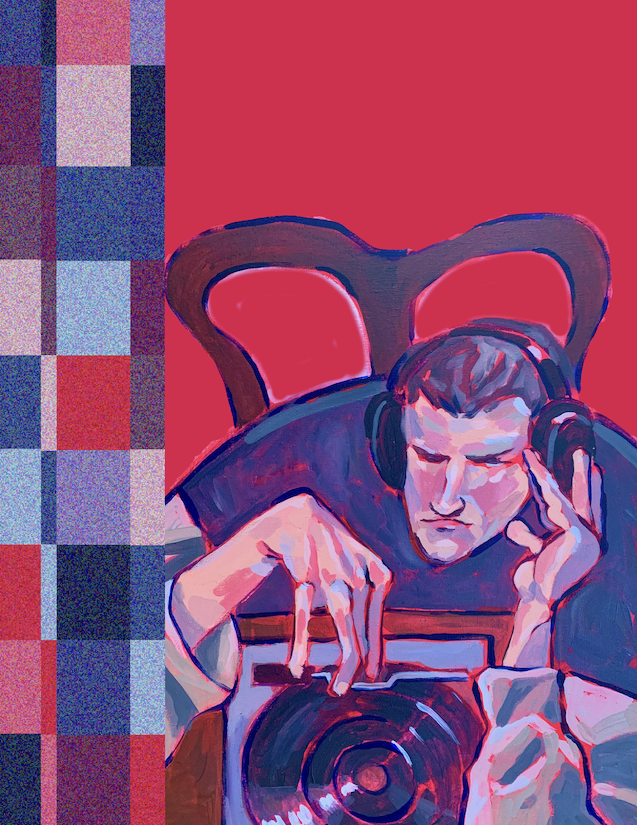
Trends: A Sole Collection

February 12, 2026
Lucy Kaplan, Juliet Corwin, Riley Stevenson, Elsa Eastwood, Ava Satterthwaite, Annabelle Stableford, and Anika Weling

In my youth, a jar of pickled herring claimed the back right corner of the fridge. I can’t quite point to my father’s Jewish ancestry as the reason; it seemed more of a personality quirk that compelled him to crave tangy fish on a seeded cracker before his three o’clock nap. My brother and I followed suit, curious eaters tempted by scores of gefilte fish and gravlax at break fast, Passover, and the occasionally attended Saturday service. On weekends, we grabbed bagels with whitefish from Lenny’s, a half-decent deli we remained loyal to for the name it shared with our late grandfather. Not the finest in the city, but every New Yorker knows that the best sandwich comes from the place around the corner. After our westward relocation, my appetite persisted. No longer able to race down the stairs and across the street to satisfy my hankerings, I stacked the cupboards with tinned fish of my own choosing. Smoked sardines in olive oil, thinly filleted mackerel, salmon preserved with lemon—a hazy ode to New York winters gone by. Salt and sour clung to the walls of our kitchen, reminiscent of the mom-andSole ME copy 25 copy (3).inddc 14 trendy to forget to eat. Somewhere around fifth grade, I think. pop shops we once frequented. This one, our own. When I left home, I folded my f ixation into my suitcase—not a trend, but a history. I etched a pair of salmon onto my upper thigh, drawn with a dark ink that felt like blood. A finelined reminder of Passover and Grandpa Lenny and my father’s pickled herring. Last month, I remember in health class, how my teacher told us about thigh gaps and how to check if we had them. After class, a group of us stood in a circle, touched our ankles together, and prayed for emptiness. We’d skip meals and then skip SILENT HUNGER WAS THE LANGUAGE OF THE STRONG. “ ” JU LIET CORWIN I stopped dead in my tracks at a familiar crosswalk in New York. There it was: the closure sign in Lenny’s window, dated two years prior and peeling at the edges. My stomach roiled as the word imposter came to my lips. I was sulking in a city that held my past and escaped my future. That same week, my father sent me a pair of winter boots, a tin of smoked f ish stuffed inside the left footbed. Somehow, he knew I was mourning. Sweet Girls By Juliet Corwin I try to remember when it became 14 rope during recess. When we got lightheaded during P.E., we’d lie and say we had cramps. (Most of us hadn’t started our periods yet.) When our bellies grumbled in class, we’d pretend not to hear it. We’d look at magazines of flat stomachs in low-rise jeans and poke at our pudge. We bragged about how long we could go without eating. We’d sneak chips and cookies when the others weren’t looking and hope the crumbs didn’t leave a trail. To eat was to be weak. We couldn’t give in to the gnawing. Silent hunger was the language of the strong. It became honorable to ache for food, a rite of passage into the womanhood we so desperately awaited. 11/26/25 4:46 PMAnd nothing could taste as good as skinny felt, right? I remember the shame that blushed at my cheeks after I caved and ate the pasta and chicken that my mother had lovingly cooked for me. On-Campus Observations From An Off-Campus Oyster Farmer By Riley Stevenson To be on a college campus is to be surrounded by trends. Spend fifteen minutes on the Main Green and you’ll see a dozen micro-trends, some here to stay and most bound to disappear into the backs of closets; new accessories worn in creative ways over ever-lowerslung jeans held up by a kaleidoscope “ HIS WORLD IS ONE OF SALT, FROST, AND FIREWOOD, OF WEARING THE SAME MUDCAKED SWEATSHIRTS TO WORK AND SEEING THE SAME FLEECECLAD OLD PEOLE IN OUR SMALL MAINE HOMETOWN. RILEY STEVENSON of belts all turning to dust. My boyfriend is an oyster farmer from a small town in Maine. His world is one of salt, frost, and firewood, of wearing the same mud-caked sweatshirts to work and seeing the same fleece-clad old people in our small Maine hometown–a life without much room for personal expression through trendy clothes. Observing the trends of our campus is his favorite activity when he comes to visit. He walks into the Blue Room, sympathetic to all of the college students hunched over their laptops, buys a coffee, and sits on the terrace overlooking the Green, noticing. As a freelance journalist and astute business landscape rendered big bands unviable. It died again in the 60s, when bebop became esoteric and cerebral, a “musicians’ music”. Young people wanted to rock instead of think. It went out with the Old Guard—with observer of the human condition, he is uniquely primed to note and catalogue, dedicated to his craft of perceiving what has changed since he last stepped foot on both this and his own college campuses. After I am done with class “ he barrages me with questions and commentary about what he’s noticed, like an off-duty WE MAY TALK OVER IT AT COCKTAIL PARTIES, LET IT WAFT OVER OUR HEADS IN ELEVATORS, BECAUSE WE, LIKE THE YOUTH OF THE 60s, HAVE ENOUGH TO THINK ABOUT. WITH MUSIC, WE SCROLL AND SKIM SURFACES. anthropologist, notebook in hand. He is excited, irascible, brimming with observations, seeking confirmation, ever-excited by his day’s work.“Does anyone here use a backpack anymore? Could the jeans get any baggier? Do you think anyone wants to buy my pre-paint stained Carhartts?” I shake my head at him and laugh, knowing the questions are the fun part, their ” answers irrelevant. We walk through the Green hand in hand as he tells me about his findings. I marvel at the ELSA EASTWOOD ” Armstrong and Ellington, Billie, Dizzy, and Dexter—and again with Bird, Monk and Miles, with Wayne and Coltrane. They say we’ve succumbed to the musical Big Mac of commercial pop, and not even Wynton Marsalis can bring us back. I believed them. Then last year, I won a ticket through an Arts Institute lottery to see Jon Batiste in concert. I never win anything on that website. I knew him only as the bandleader on The Late Show, but I had to go. Arriving at the venue just before 7pm on a Thursday, I stepped past a nauseatingly long standby line of fans clutching setlists and trading deep-cut references with fervor. I recognized some from my music theory courses and offered a few guilty waves over worlds we occupy, the observations that allow us to see how others see their world, how lucky I am to share this world with someone as thoughtful and observant as he is. Jazz is Dead By Elsa Eastwood They say jazz is dead. It died first after World War II, when a changing 15 my shoulder as a woman scanned my ticket. I chose a seat in the very front, just beneath the grand piano—the piano on which my jazz hero would perform a reharmonized “Star Spangled Banner” unlike anything I’d heard. His expansive fingers stretched across the keys like vines, entwining gospelinflected voicings with modal color, face contorting in testimony. His was a music of lineage and remembering, pain and power, the improvisatory human experience; a music that traverses valleys and wades through Sole ME copy 25 copy (3).inddc 15 11/26/25 4:46 PM“That’s the trend, Mom.” rivers, moving through space and psyche. It was sacred and lyrical, percussive and raw. Creation and truth-telling unfolding in real time. The arrangement lasted 15 minutes. Standing with the crowd, hand to heart, I soon shook with tangled sobs of peace, joy, and heartbreak at what felt like the most perfect convergence of sound and history. The old and patriotic, broken open in one trembling instant. I say jazz is alive. It’s adapting to a changed landscape, vivified by its own endurance, shedding its skin in the dark. It emerges between genres like a ghost in the machine. We may talk over it at cocktail parties, let it waft over our heads in elevators, because we, like the youth of the 60s, have enough to think about. With music, we scroll and skim surfaces. But if allowed, it will instruct. It will wait for us to remember how to listen. It will continue to send messengers to remind us that, bruised but dignified, it still pulses beneath the noise. The Chronicles of the Traveling Pants By Ava Satterthwaite The first time I asked to borrow my mother’s bell-bottoms, her face “ STILL, IN THOSE BELL-BOTTOMS LIVE FIELDS OF HER ROSE AND LAVENDER FRAGRANCE, DENIM THREADS INTERWIEVING LIKE STRANDS OF HAIR SHE’D DUTCH BRAID BEFORE BED. AVA SATTERTHWAITE scrunched in disbelief. “That’s the trend now?” she asked, befuddled. I never wear them, of course – the tide of the trend shifted long ago. Still, in those bell-bottoms live fields of her rose and lavender fragrance, denim threads interweaving like strands of hair she’d dutch-braid before bed, silhouettes of her twirling between twill ruffles like we’d dance in the kitchen to “Better Than Revenge” and “Fearless.” All around me are reminders of adolescence. Pink bow UGGs mellow into classic tans. Black puffer vests I followed her to the attic, where we coiled between stacks of doodle-laced notebooks, faded letterman jackets, and clusters of swollen crates— one labeled CHRISTMAS DECOR, another RECORDS + CDs, a third DENIM. It was like Narnia – an entire world of memories hidden behind her wardrobe. She found the bell-bottoms under a mound of distressed overalls and low-rises and threw them over her shoulder. Snickering, she asked if I’d like a flower headband or some fringe boots to finalize the look. But, as I stood in the mirror, smoothing the creased flares and fiddling with the waistband, a tear skimmed down her cheek. “That’s the trend?” she echoed, voice faltering. I nodded. “It’s just like I remembered.” ” When I came to college, my mother snuck those bell-bottoms into my suitcase as a farewell, her scribbled note stuffed between its folds. Call Your Mom! it insisted – like I’d need the reminder. Frankly, the further I wander from home – from childhood – the more striking our resemblance becomes. I listen to “Landslide” with such reverence it feels biblical. I add crushed Kellogg to my cookies “for some crunch” and dark chocolate chunks “for the bite” like she advised. I drink iced Sauvignon Blanc and shake my leg so excessively the whole table wobbles, its steady thrum reminiscent of our once shared dinner table. I never considered my s e l f sentimental until I rediscovered her bell-bottoms looming in the recesses of my dorm-issued wardrobe. 16 overtake matted lime-colored North Faces. Like my mother, I’ve been fossilized over and over, my fleeting memories buried beneath old boxes and new clothing, my own forsaken Narnia. The trends, timeless and teenage-dirtbagish alike, fill these archives with precious evidence of our evolution. I grab the bell-bottoms and look toward a clouded mirror. I’m much older now: cheekbones more defined, brows furrowed tensely. The denim is stiffer now, too. It holds me a little tighter, and I think warmly of my mother’s arms. It’s just like I remembered. Merriam-Webster By Annabelle Stableford trend noun a : a line of development : approach b : a current style or preference : vogue c : a general movement : swing d : a prevailing tendency or inclination : drift Approach: To identify three intrigues: two trends of my life, and for fun, a not so subtle trend that consumes me, which you may discover hidden throughout this text (although I am no mastermind). Vogue: So it goes, it is not in vogue Sole ME copy 25 copy (3).inddc 16 11/26/25 4:46 PMbe in vogue, nor am I in vogue. But I persist. Swing: According to my memory, everything that ever happened to me happened when I was eight. There were troubled nights and tears culminating in the visit to the energy healer, who proclaimed me a blind farmgirl in a previous life (that escapes me as well a pendulum now, coming back in crisis to explain everything). And the drunk man at the natural hot springs and the woman who told me to look away, to imagine his image washing away in the river (except “ Quarantine Trends By Anika Weling It’s sad to think of what I will say when my children ask me what I did during the COVID-19 pandemic, the most prominent event of our generation. I wish I could say I did anything useful. I could lie and say I helped save lives or protect rights, but in reality I sat in bed for months on end, fixated on a little LED screen I REFUSE TO FORGET MY LIFE: THE SHARPNESS OF WORDS, THE KIND THAT ONCE YOU READ THEM, THEY HARBOR WITHIN YOU. eight inches from my face. I listened to the distant hum of the news from my living room, an ominous loop of ANNABELLE STABLEFORD every time I try, the current reverses). And when I read Tuck Everlasting and in the story discovered a profound magic all for myself (novels, within my realm of independent reading now!). Ex. “You have a favorite spot on the swing set / you have no room in your dreams for regret.” 1 Drift: “Pulled him in tighter each time he was drifting away.” I refuse to forget my life: the sharpness of words, the kind that once you read them harbor within you; the ten hardboiled eggs I watch someone eat at breakfast, all in one go (perhaps not profound, but noteworthy); the things that happened to me when I was eight and in all the eras after. All of this goes into my Volumes, my Immortal Histories, my Moleskines (2019-2024) and Leuchtturms (2024-present), my most critical trends. I don’t let any of it drift away. Ex. “Pulled him in tighter each time he was drifting away.” 1 ” muffled, monotonous voices with nothing good to say, so I hid under my covers. I watched video after video on how to make dalgona coffee, while hating coffee, and how to 1 Attribution of quotes (spoiler warning): Taylor Swift do Tiktok dances, which I had no desire to ever learn. I saved DIYs and recipes to a folder, only to never look at them again. Propped up in bed, I took online classes while the world fell apart around me. The numbers rhythmically continued to climb. One million. Two million. Ten million. No one ever taught us what to do in the case of a pandemic. No one thought we would need to know. So in the utter chaos around us, we turned to distraction to survive, to escape. Never-ending entertainment f lashed passed us as we chased a relief we could never quite reach. We fell into rabbit holes where we never had to stop and realize what our lives had become. It’s trend, after trend, after trend. Around me, everything is still, everything is quiet.

Most Recent

Most Recent

The Razor Blades and the Mirror

Luca Raffa
April 2, 2026

I do not remember the first time I shaved my face. I must have been thirteen or fourteen, the dawn of adolescence. I was accustomed to waxing before. The sticky strips that left my upper lip flat would come crashing the way rough waves smooth the seashore. The sprouts of hair that once clung dearly to my skin like barnacles were gone. I did not like this stinging feeling that lingered beneath my nose. When fuzz began to grow from my sideburns and climb my cheeks, I folded to the promises of a razor. This moment soon became a task I observed almost daily as if I was a priest saying my morning prayers. I found ample pleasure in this ritual, and I still do. The sharpness of the blade is refreshing, and the foam from the shaving cream tickles my skin. Prickly hairs disappear with each stroke, though two thick eyebrows remain and a few stray hairs in the creases of my nostril caves. I face myself in the mirror, and the man in front of me stares back and smiles. Giuseppe Principato appeared to be watching in front of me. I blink. It is me. I think we look alike. I have always seemed to be familiar with this stranger whom I have never met, though maybe in dreams or in photographs. There is a black and white portrait of my great-grandfather that I found once in my grandmother’s brown scrapbook. It had begun to rot and was taking on a yellow tone. The young soldier’s oval face, straight eyes, and gently combed hair proclaimed a soft confidence which I seem to have inherited. It was 1940 when this photograph was taken, only months before his deployment to Greece. My grandmother told me that her father would come back unrecognizable to his family, a foolish skeleton figure who had sustained himself on rotten potato skins. Around the same time, another great-grandfather— Santo Salvatore Carino— was somewhere lost in the Sahara. He was a cavalier in the Italian army, though no one ever told me his war story. The fascist dream was brief. The Allies quickly halted Mussolini’s invasion of Greece by the spring of 1941, and by the spring of 1943, the Allies defeated Italy’s imperial project in North Africa. My great-grandparents were liberated from their roles as soldiers, heroes who fought to restore a dormant empire long lost to the sleeping ages of time. Divorced from their muskets, they retreated to their patient wives and retired to simple work as day laborers. Meanwhile, the fighting in the North continued, as civil war ensued. Antonio Raffa, my grandfather, was barely a man when he became a partisan. His battalion immediately surrendered to the German army, and he was brought to a camp outside of Munich. He spoke little about his experiences as a prisoner of war. Still, there is one story that my father told me, and I remember feeling proud after I heard it. Me and my father chuckled, imagining the musty, confused, pot-bellied old man forgotten at the nursing home as sharp and silver as a knife. Unlike his fellow prisoners, my grandfather did not smoke. He would trade the cigarettes given to him for the few coins others carried and slowly created a quiet business in the camp. When the war was over, he had enough pocket change and was able to cross the Alps by train heading south. When he ran out of money, he followed the railroads home by foot. It was the first time he ever saw how beautiful his country was. Pepe Carino, my other grandfather, was only a boy during the war. He remembered tasting chocolate for the first time, a curious gift from a gentle foreigner. Operation Husky brought the forgotten Sicilian town my grandfather was from under British occupation, and British sailors often mingled with the townspeople. Soon after the war, my grandfather became a sailor in the Italian navy, and seemed to now resemble the aliens who had once arrived on his shores. Despite Italy’s disgrace to Europe and to the world, he still seemed to honor a proud nation that was beaten and bruised. He too was proud. In the memories of black and white photograph prints, he can still be seen wearing his white uniform and a round, white hat. He was a handsome man: he had tall legs, a juvenile smile, and a firm demeanor. My grandmother would tell me that he was the greatest man she had ever met. They fell in love when he cut her hair. After his two year service, my grandfather became a barber, bringing his trade overseas as he chased his fiancée on a ship for Nova Scotia. During nostalgic summer evenings in my grandmother’s kitchen or hour-long conversations over the phone with her, I remember feeling red inside and swelling with awe. Toronto was where Pepe Carino followed Maria Principato and where Antonio Raffa followed Maria Ciani. Toronto was the city of immigrants where the fates of the Principato-Carino family and the Ciani-Raffa family became forever intertwined at a grocery store. My father, who was fifteen at the time, would stock the produce, and my mother, at seventeen, would bring my grandmother to the store every Thursday. My parents always laugh when they recall how they would stare at each other in silence on the occasion. For weeks they glanced at each other without saying a word. Once, my grandmother let her daughter and a shy boy meet, pretending not to know what it was all about. They spoke. My mother invited him to visit her at the department store she worked at. He never went, and my mother found a new supermarket to take my grandmother to. My father’s first name is Constantino. This was the name of a nine year old brother my grandfather lost to a lightning fire in a barn. My father’s middle name is Michele, or Michael, and it honors both of his grandfathers. His last name is Raffa, a last name from a line of humble mountain people which I too carry down to my own children one day. He was born a younger brother to two sisters — one was close to him in age, but the other was eighteen years older, and would soon know her own family. His new clothes were often their torn hand-me-downs. The bike he used during his first job delivering newspapers door-to-door was pink. For years, he saved up enough money for a new bike, only to have it stolen the day he finally bought it. My father’s childhood toys were his mother’s pots and pans until he befriended a few troubled Irish boys at the Catholic school he attended. My father was only a decent student, and his father’s beatings expected better grades. At school, he would eat a Nutella sandwich on Wonder bread every day for lunch. At home he might find bits of a rooster’s comb in his pasta and often ate the dandelion greens his mother would pick from the side of the road over summers. Nothing went to waste. Yes, my father never visited my mom at her work. But this moment is not where their story ends. Two years later, they would see each other again when he was getting on a city bus. Again, he saw her and did nothing. When he got off at his stop, he looked through the window at the girl he did not yet know would be his wife, and began to curse at the sidewalk. Yet little did he know that he would see her again by happenstance over the next three consecutive days. Destiny seemed sure. On the third day my father approached her at the beach with a joke, and this spark of laughter set their young romance aflame. Every time my parents told me their story, I relished the golden honey my heart dissolved into, and I began to dream of finding romance like theirs one day. Their love evolved from casual dates at Dairy Queen to dinner dates at fancy restaurants with red lipstick and cologne, then to a sparkling engagement ring that would dazzle one day with my mother’s wedding dress, to a painful chapter of parenthood that begun with a newborn that was going to die, to years of hospital visits, to my older brother’s birth, then to mine, to the inevitable death of their firstborn, and finally to a new life in America. Though my father’s prospects in life were never extraordinary, when he became father to an ill daughter—my sister— work became his duty. Promotions came and with them more expensive suits and more frequent dinners out with business colleagues while my mother stayed at home to watch over the children. Still, my father would buy me lemon croissants from a local French boulangerie on weekends and would reveal from behind his back the stuffed animals he would bring home from business trips. He used to have whiskers of hair floating above his head, but now his baldness shines like gold. The first time I shaved, my father showed me how to do it. Maybe I like shaving so much because it reminds me of him, his aggressive scraping before work, the buzz of his electric razor waking me up in the mornings. It reminds me of the other men I recognize in the mirror too, their features and flaws shadowed in my own face. Searching for the man within me, I find traces of the man within my straight nose, calm eyes, and mysterious lips. A glimmer of sunlight flashes in the mirror. I splash the cold water from the sink to my face, washing the careless wounds on my neck, as streaks of blood emerge from my pores like lava. I pat my naked face with a rough hand towel, and I am reborn. Inside me, a patient volcano is waiting to erupt.

On Foss Hill

Elsa Eastwood
March 8, 2026

I am a California native in the Northeast. It's my first week in the season that I've been told I won’t survive, and I am bundled in clothes—a scratchy scarf, two pairs of pants, a big blueberry parka and a knit hat—all newly purchased. The sun has just risen and crisp air burns my nose. A fresh coat of snow sits heavily on the limbs of trees. Having forgotten to account for the time it takes to layer, I’m running late to class. I glance anxiously at my watch and hurry through the blanketed streets. Out of breath, I arrive finally at the top of Foss Hill, the steep, icy slope that stands exactly between me and the classroom I’m supposed to be in two minutes from now. I lean over the edge to scout my path. After yesterday’s storm the day prior, Foss Hill has been sledded and skied down a great deal. Overuse has scraped any layer of powder clean off, leaving only a frictionless, glistened plane thinned by sunlight. Small outcrops of rock and grass puncture through its marble-like surface, and the whole sheet has been darkened to a murky black-grey. To my left, a paved, well-trodden path winds its way lazily down the incline, doubling back on itself in long, patient curves. But I hate being late, and straight down is the fastest way. Thinking of Robert Frost, I quickly convince myself that descending Foss will not only get me to Intermediate Spanish on time, but will prove me a true maverick—what was once a choice against all reason becomes one of authenticity, and perhaps even courage. I take one precarious step forward. It looks worse than it is, I tell myself. In an instant I find myself skimming rapidly downwards on my butt, my bald-treaded boots flying through the air, limbs flailing. Rows of pine trees and red-brick spires fly past in my periphery. At the bottom, I’m flushed and shaken. Chill seeps through the pockets of my jeans. I close my mouth, which must have fallen open at some point along the way, and wince as small bruises form constellations across my tailbone. I look again at my watch. My class has begun. But the urgency that led to my fall seems to have been lost somewhere in it, and in a moment of catharsis and humiliation I lie back against the hill, laughing awkwardly to myself, not knowing whether to bow or apologize or forget going to class at all. The world narrows suddenly to the question of whether I’d been seen. I swivel my head. The campus is nearly empty, aside from a stranger wearing a backpack and a hefty red coat. He stands, eyeing me, surrounded by snow like a dot of blood or cranberry juice on white carpet. “You good?” “Yes,” I reply. “Thanks.” He nods, burying his nose into his scarf and resuming the trudge forward. I lift myself up by my palms and follow him as whatever spectacle I thought I’d made dissolves into the cold.

Entrance

Sara Harley
March 5, 2026

Second floor, end of the hall on the left. As I turn the dented brass door knob, the wooden door creaks open, revealing the narrow expanse of my high school door room. It’s just after seven o’clock on the night of my eighteenth birthday. Setting my ratty canvas tote aside, I find a seat on the old carpeted floor and wait for the day to spoil. The silence feels like another reminder of the passage of time. Only seniors can live in single rooms. After spending my early teenage years sleeping next to strange roommates with foul-smelling microwaveables, I usually cherish privacy. But today, I’d shower in shrimp–flavored ramen for propinquity. My roommates and I almost never spoke, but I wish for closeness. I moved away from the hills of northern California to go to boarding school a few months after I turned fourteen. My high school is only a three-hour drive south—two and a half, if you’re lucky—situated in a little beach town. I left because I loved school perhaps a little too much. This is my fourth year living in dorms. Surveying the walls, the dark wood and cream-colored paint are dotted and scratched with age. Decades of Command hooks and adhesive sticky tape marks cover the walls. I had tried to cover the age by hanging family pictures and post cards from art museums, but they don’t quite fill the gaps. I know that when I try to gently pull them from the walls next month, they’ll just add to the defaced paint—an enotropic right of passage. No more than a hundred square feet, it’s a shoe box, but transitively mine. I wander over to my beige vinyl desk. Opening the center drawer, I peer down at the names Sharpied onto the wood: Callie Harris from ‘07, just-Maggie from the year 2000, and dozens of other signatures from women who have lived in this very room. Over the years, signatures have accumulated all over campus—written inside gym lockers, carved into the wooden tables in the dining hall, and even painted in acrylic on secret cervices in the art room—from students trying to make their mark. Some signatures are more elaborate than others, with flourishing cursive capitals and consonants; others write over previous students’ names with bold, confident letters; but most of the inscriptions are small and neat like good Catholic school girls. The ink on my drawer is beginning to bleed from accidental splashes of water, blending shades of the blue-ish black, red, green, and pink into monolithic brown. Pushing away a stack of Post-it’s, I uncover the signature of Sharon Wallager ‘90 written right in the center with big, calligraphic letters. Who was she? I almost Google her, but decide against it. Better not to kill the mystery. The way somebody signs their name can tell a lot about a person. Personal marks that seem to say I was here. During middle school, many of my friends practiced theirs like a mantra on scrap paper. Every time my dad pays for dinner, his pen makes the same scratching noise—slow and curled, and then finishes with a lick. Whenever I sign documents, I gulp and try to write my first name in haphazard cursive as quickly as I can, hoping to make a similar noise as my dad. The desire to create a signature feels so masculine. My unquenchable desire for a gold star makes me nervous to sign my name, and yet, I feel compelled to do so anyway. It's times like these that makes me regret never designing a signature. The permanent pen feels permanent, too irreversible, without an autograph. Except for a handful of dorm faculty, like my Welsh world religions teacher, I doubt anybody will see the signatures but those who will live here after me. One of these days, I’ll find a secret spot and sign my name to the drawer like a yearbook that will never be finished— a lineage that I’ll never know but feel everyday. Across from the door, a mirror and a window hang over my desk. There are fingerprints on both from careless mornings. Peering into the mirror, I often like to imagine the reflections of previous tenants looking back at me. My high school—a Catholic college prep school for girls—opened in 1950. I can see my hair cut into a little gauche bob curled at the bottom. My plaid uniform kilt is a few inches longer, but my collared shirt still has the same little embroidered crest on my left collarbone. I think I would’ve been more graceful had I been born then, but I would’ve despised home economics. Making up stories makes me feel less guilty for forgetting to buy Clorox wipes. Sorry, dad. Seeing myself now after another year under the beating sun, I notice how my reflection has changed: my jaw appears narrower and the skin around my cheeks grows drier from the chlorine at swim practice. The inertia of my fleeting youth and the inevitability of getting older scare me. Rubbing the delicate skin around my eyes, I wonder where time has gone. The friction against the glass proves pointless. My physics teacher pops into my mind and reminds me that an object in motion stays in motion. The sun is beginning to set. Looking out the window, the light begins to fade in the distance from golden to pink and orange. At least the sunshine appears to be doing the plants some good. Leaning against the side of the window between bookends are miscellaneous copies of Dover-edition Shakespeare plays, a highlighted Camus, my diaries, a little whiteboard for Spanish verb conjugations, a few old print copies of the New Yorker, and about a dozen classics that I hadn’t read, but made me feel smart for owning. The curtains around my window are barely worth mentioning, except for the fact that they’re light blue, come with the room, and just a little too ugly to be cute. I cast a glance at my two ferns, a pothos, and an old ivy sitting in front of the glass. They’re beginning to take up more space than I can manage. My newest addition is a baby fern from my biology teacher after the national exam. No larger than an espresso mug, I have a bad habit of smashing its little stalks between the pages of my colossal biology textbook, so its pointed leaves have dried yellow and brown spots, instead of dark, judicious green. The rest of them are from a bookstore with a plant atrium in the back. I loved going there during my freshman year on the weekend shuttle—a school bus that looks like half a stick of butter—going south toward the beach to pick out their pots from an eclectic selection of cat heads and funky colors. I picked out white ceramic ones because they had little drainage holes in the bottom, and I have an overwatering problem. I grab my neon orange water bottle named Jamie from on top of the dresser beneath the mirror, unscrew the leaky cap, and divide whatever's left between the four pots. It couldn’t hurt. I thought the ostentatious color would help me not forget him places, though my swim coach and the upper school office would say otherwise. Evoking moans and groans from my friends, he became a micro campus celebrity as a result of the many places I’ve left him—leaning against classroom desk legs, sitting on the edge of the pool deck, hiding under a pew in the campus chapel. Covered in stickers, I can just make out one from a coffee shop nearby—a little tandem bike with a rainbow surfboard. There’s another from a family trip to southern California, one from an affirmative action political protest with flowers in the shape of ovaries, and a few gifted––and a couple stolen––from friends. After dropping Jamie in the rain, bonking him on the side of desks, forgetting him on the pool deck, and letting him fall out of the side pocket of my equally defaced Northface backpack his once-smooth surface has become disfigured. Even so, his scratches and dents make him feel like mine. I decide to return to the floor. Grounding myself beneath the sterile ceiling lamp, I slouch against the linoleum drawers below my sleeper-sofa twin-XL. The cold artificial, blueish-white hue is dissatisfying. Through the semi-translucent light shade, I can see a spotted graveyard of dead moths. Only a month before graduation, I felt the room had already begun preparations for my departure. I notice a thick humid haziness gathering in the cubbyhole-sized space. I couldn't help but feel the room was moving on without me. If I really squint, I can see the brownish carpet is composed of different shades of blue, maroonish, and mustard threads, hiding decades of soda stains, hair, remanence of rumpled pastries. and loneliness. Leaning my head against the mattress, I feel the arms of my dad’s old sweatshirt graze against my back, sticking out from the plastic drawers from below my bed. I have a bad habit of chucking soiled clothes in the closet when I’m in a hurry, which pull my neatly hung dresses down with them. Toss in damp, miscellaneous pool equipment from swim practice and you’ve got a party. The soft cotton stitches of my multicolored hippie quilt pull tighter. After a long morning of celebratory phone calls and texts chock-full with emojis, my phone finally stops glowing. My friends are retired in their rooms to prepare for our last round of exams. Bending my knees toward my chest like a child with a stuffed animal, I settle my phone in my lap. Scrolling, I look up at the popcorn ceiling and back down again, waiting. For what, I wasn’t quite sure––everyone I hoped would text or call already had. Swiping between videos from politics to celebrity drama to cute dogs in little hats, the distractions weren’t distracting enough. Finally, I open my photos app instead, and begin to look at old photographs from my childhood. I was born on the first of May—May Day—a holiday marked by flower crowns and ribbons. I remember that time of year best during elementary school. The school year would be almost over, the blacktop would begin to make a mirage again from the growing heat in the afternoon, and the grocery store watermelon would finally stop tasting so mealy. I share my birthday; I have a twin sister, but boarding school is so not her thing. Since I left, we haven’t spent a birthday together for years. My dad loved to throw shared birthday parties for my twin sister and I. Shared cake, shared cards, shared friends. We both secretly wished we could have separate celebrations, as if to somehow prove we were, in fact, separate people. Luckily, we’re fraternal. I remember sitting side by side at the kitchen table while our family sang happy birthday off-beat––two names instead of one. She hated the song, but I loved looking at how our dad smiled when he sang to us. As kids, I think we both believed sharing a birthday somehow meant we were half as celebrated. But every year since I left for high school, I find myself reminiscing about her, wishing she’d teleport. I realized she was the celebration. On our eighth birthday, we invited both of our elementary school classes to a tropical-themed party. There were rainbow balloons, cut fruit, heavy water guns, cupcakes, and inner tube galore. Our friends screamed and laughed, wearing dark Nike swim shorts and flower patterned cover ups. Rays reflected off the pool and made our skin glow. As the afternoon sun waned, it was time for my dad’s pièce de résistance: the watermelon relay race. I loved being competitive, but I had, and still have, terrible stage fright. Standing at the ledge, we were divided into two teams and organized into lines. “Sara, why don’t you go first?” My dad asked, smiling. He still has the pink polo he was wearing then. “Do I have to?” “Come on—it’ll be fun! Here, take this.” While he was trying to downplay it, my dad asked me to go first because, well, nobody else wanted to. I can’t remember who started the other team. But then, materializing seemingly out of thin air, he handed me a gargantuan watermelon. Hugging it to my chest, my arms ached from its weight. I prayed my melon wouldn’t split in half and put on my best game face while my dad walked to the other side of the pool to referee. Yelling, he told us to swim—there and back! The victorious team won stickers and first dibs on dinner. Raising his fingers for the countdown, I prepared to jump. 3…2…1… But looking back at cupcakes and sun-kissed cheeks on the boundary between adolescence and adulthood, getting older feels like nothing to celebrate. I remember when I thought my childhood would never end, when I thought being seventeen would mean lockers, boyfriends, and house parties until three. My seventeen looked more like study hours from 7:30-9:30 monitored by the dance teacher, Accutane, and mandatory mass on Sundays. A transitory age, the ordinariness makes me feel like I took the fast track to adulthood. The curve in my spine begins to ache against the bedframe. Setting my phone aside, I watch the setting sun’s rays stretch through the window like a cat arching its back. As I reach for the door, the aged wood shines. After so many years of chipping, knocking, and jamming, the ridges of the smoothed trunk still glow bright beneath the worn varnish. Sliding on my dad’s rubber sandals, I wander back down the hall again.

Gemini Season

Elaine Rand
February 20, 2026

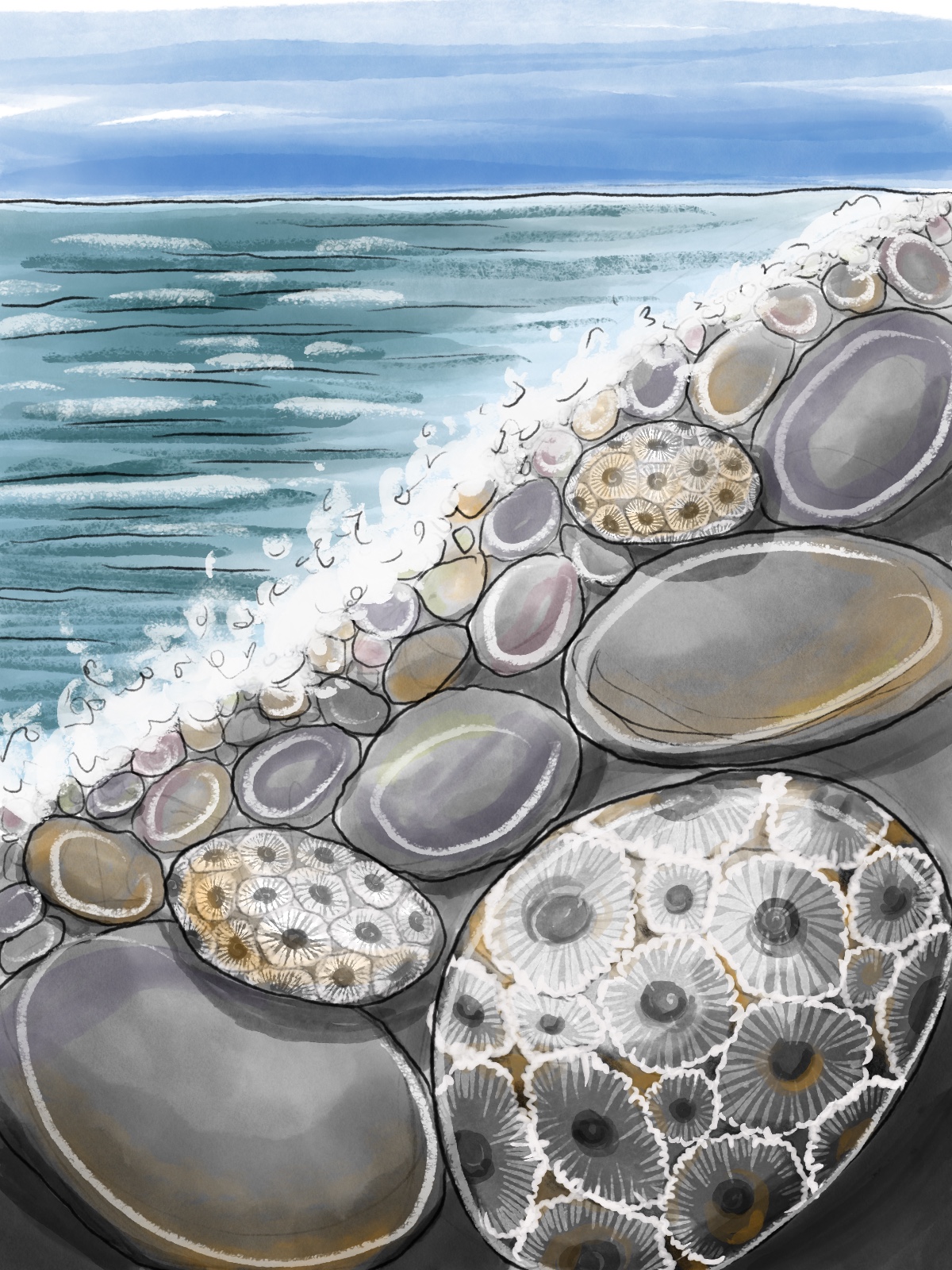
Before the world was big, before Benefit Street and Big Bend Boulevard, before Achilles tendonitis and all the awkward annual apple pickings, before I was worried about mono and mold, I had the impression that every summer would be the same. And that’s because, for a while, they were. We used to drive up into Benzie County in northern Michigan sometime during Gemini season to get some time by the lake. There was the wooden platform under the cottage we’d stay in, home to roots and rodents, a bunker of sorts. The windy bike path around the lake that led to the gift shop full of beeswax soaps and honey sticks. The caramel agate and grey Petoskey stones, freshly tumbled, their patterns like tectonic plates trying to shift around one another. The vacationing family in the next cottage over, whose kids made me a little nervous (they crushed at shuffleboard). When I first came, I avoided the other kids and their pavement games—too much pressure to make a good impression. I preferred skipping rocks and paddling out to the bobbing wooden rafts alone, lifejacket chafing at my neck. By my final visit, I’d gotten brave. The tetherball pole became my purview. It stood at a lean, barely secured under the lakefront sand. But were all those summers really the same? There was the year I came a day late, voice hoarse from the strep throat, digital thermometer and bubblegum pink antibiotics double-bagged in brown paper; another year, with strep again, this time missing out on two days in the cottage. There was the year my dad left early to go to a friend’s funeral, and my mother drove us home at 6 in the morning to get the rental car back on time. I sang loudly to keep her awake, occasionally pinching her cheeks at her request—was I allowed to sit in the front seat that young? I dipped my fingers into a crushed Ice Mountain bottle and touched my cool, wet hands to her temples as she drove through the dark. The first Michigan summer I can remember, when I was five, a golden bee stung the tip of my big toe while I sat in the sand, and I spent the rest of the day inside. It felt like such a waste. Silly me, getting a sting at nine in the morning, before I’d even gotten in the water. I wore hot pink water shoes from then on. I’d look forward to our Michigan trip all year. The state itself became my obsession, the lakefront the setting for each of my daydreams. I thought I’d find true love there by the bonfire. I looked for signs in the face of any sweatshirted teenager who passed me on the beach to see if they saw anything in me. I thought I could swim to the other side of the lake, if I tried hard enough. I didn’t know it was eight miles long. There was another family who overlapped with mine for only one summer, whose toothy twins I continually mistook for each other: Caroline and Kelly. They were nine, I was seven. We’d roast marshmallows together under the stars and try to match the constellations to the ones printed in my well-worn library book. Gemini was barely visible, but we found Ursa Major just fine. The twins rode horses back home in Kentucky. We stayed pen pals for a couple years. Their mother addressed the envelopes with loopy flourishes and big circles to dot each “i”. Their town was one of those hit hardest by the tornado last May. Now the planets have shifted positions a million times over and the shoreline is disappearing and I haven’t visited the lake in nine years. New starscapes, new summers, new lakewater levels. New families at the bonfire, new rodents’ nests under the cottage. But how would I know? So, you see, without the anticipation of the annual trip, without the routine of it, the guarantee of new faces for daydream fodder, the water’s placid constancy, it’s easy to prickle when Gemini season rolls around. No more whistling lakeside breeze for me, just the pitter-patter pattern of the rain on the cement. The tropical levels of humidity haven’t arrived just yet, but they will soon. There will be signs.

See More

Our Mission

Our Mission

Sole Magazine was created to provide the Brown community with entertaining and informative feature writing about true events, people, and experiences but without the stylistic restrictions of hard journalism. We aim to tell interesting stories in interesting ways, using techniques of characterization, description, and theme, while experimenting with structure and tone to produce creatively crafted narratives.

Meet Our Team
SAO Disclaimer

The content of UCS/GSC recognized student organization websites is generated independently from Brown University. The statements, views, opinions, and information contained on the site are personal to those of the authors and student organization and do not necessarily reflect those of Brown University. The content on the site is not reviewed, approved, or endorsed by Brown University or its faculty or staff.