Brown University's source for creative nonfiction

Featured Pieces

On MRI Machines, Cabinets, and Freshman Triples

October 16, 2025
Ina Ma

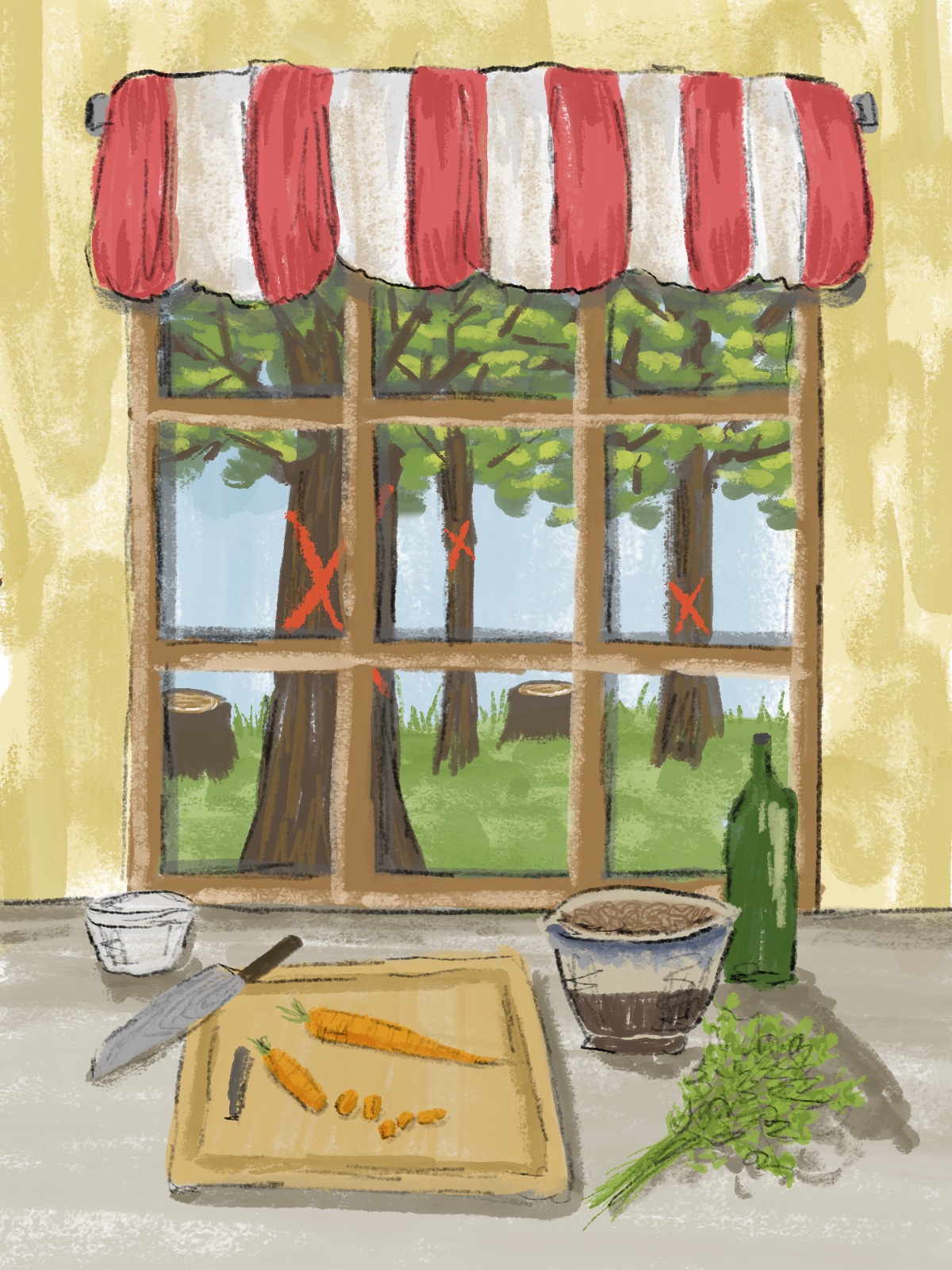
Things they don’t tell you about science: $110. They give you $110 for an MRI study. Or they do tell you, but only after you’ve read the newsletter and clicked the buttons and sent the emails, curious because you never had an MRI before. Then they tell you the magic number you will sell a few hours of your time for, to satiate your curiosity. You write about yourself in the email: 18 year old female, normal and corrected to vision, meets all requirements for the study, no issues, you are nothing less than perfect. Sidney E Frank Hall, opened in 2006, is a beautifully modern glass building that should be put on the front page of a brochure for Brown. The MRI Research Facility is in the basement of SFH, beneath the crushing weight of the five-story, 169,000-square-foot structure. You can touch the ceiling if you stand on your tippy toes. They will put you in an EEG cap and spend two hours gelling you up. They will press the metal nodes against your skull and it will teeter between pressure and pain. The gel gets inserted with a plastic syringe and forms an uncomfortable cool wetness between your hair and the cap. You may fall asleep between the methodical workings of two strangers. It is okay if you have a thin metal wire behind the rows of your teeth, permanently bonded to keep your teeth straight after two years of orthodontic treatment. It is okay if you forgot to mention it the first time they go over the screening questions because you will remember it the second time and your orthodontist will send them an email. The researcher says it is okay and your orthodontist says it is okay. You will still worry that the MRI machine will rip it out of your mouth with its magnetic force, and then your teeth will no longer be straight. The MRI machine is beautiful. She is sleek, white, and powerful, illuminated by a halo of soft yellow light. She thrums beneath your feet because she is alive, sending quiet reverberations running down your spine. The facade is ruined by a gray line of fraying duct tape running down the inner seam of the scanner. MRI immobilizers made of foam and gel slot you into place on the patient table. You feel like a mounted animal, ready to be stuffed and posed—the immobilized yellow perch screwed to driftwood, the paralyzed bluegill flush against his plaque. The patient table is thin and flimsy plastic quaking beneath you as you are mechanically moved into the all-encasing white of the scanner. They cover your body with a white sheet to keep you warm. You are a draped cadaver being slid into the mortuary cabinet. The. MRI. Tube. Is. Smaller. Than. It. Looks. They can taste your discomfort. They are kind. One offers to play a video of fish as they set up. You will watch the video of fish. The fish will swim when you cannot. You ask if you can be taken out between the assignments (no), if they can talk to you during the assignments (no), if you can wiggle your head a little (no). Once you are done with your silly questions, the machine will rumble to life. The song of the scanner swoops between pitches, high to low, beeping to booping. Between each bar the scanner shakes. You are lulled by the machine. Guilt. You aren’t supposed to be dozing off, but you are. Trapped between the sterile white walls of the scanner, your mind is the only thing that can spin, so you sleep to escape. You try to summon the comfort you found in small spaces as a child, squeezing into cabinets and sliding under the bed, but it doesn’t come to you. Don’t let the nausea overpower you. Click your button instead. Click. Click. Click. They will pull you out. You won’t be in there forever. You peel the EEG cap from your head. The gel will have begun to dry and crust on your scalp. You will be annoyed at having to wash it out later. In the moment you will only be able to feel the crashing waves of relief. It surprises you that what surprises you is they pay you in cash. You were expecting something digital, or at least a check. When was the last time you held so many crisp tens in your hand? You will take a nap afterward. about growing up: There exists a hexagonal wooden model a little less than 30 inches in all dimensions and of a deep walnut hue. You are young, so you are only two cabinets tall. The cabinet has a pair of inset wooden doors, each decorated with an ornate curved brass handle. The doors were engineered in such a manner that you can only open one from the outside and have to push the other open from the inside. It takes a tug—the cabinet resists. Online quotes of similar prototypes go up to $1,000, but knowing your parents and the timeline of cabinet acquisition, it was rescued off the side of the road or from a neighbor’s driveway yard sale. It is fun to play pretend. You meticulously move the vintage holiday mugs full of cables, discarded cardboard children’s books, and other miscellaneous items out of the cabinet. The cabinet is your den and you are a mother fox, the cabinet is a mountaintop cave and you are a dragonet, the cabinet is safe and crushing comfort. Slowly, the cabinet will shrink and the space between your skin and its walls will grow smaller. One day, you realize you cannot fit in the cabinet at all. You are hit with a feeling of loss but you do not know what you are missing. about dorms: Some triples are 537 square feet. Some triples are 259 square feet. Some triples have the floor’s electrical closet jutting into the room, making the narrowest part of the room 38 inches wide. Just enough to slot a twin XL mattress. Some triples are too small for three people. Once you move into your dorm, it will be even smaller than before. Your things seem to inch forward, taking up more room until you periodically push them back into place. They are crowding for more space, your space, so you will have to fight for it, shoving clothes into wooden dressers and memorabilia into plastic gallon bins. When you lie on your 38 by 80 inch twin XL at night, you imagine you can feel the walls of the room move to the breaths of your roommates. Your bed is pushed flush against the wall and the wall pushes back—no matter the season, the painted cinder block is strangely chalky and clammy to the touch. You imagine the wall is sweating. Your third roommate moves out. Somehow, the room feels larger and smaller than before. Her part of the room is crossed off with an imaginary line and when you step over, you can feel the oxygen atoms that long exited her lungs rattle around yours. There is nothing left but bare matress and uncovered tabletop. She had the narrowest part of the room. Maybe that’s why she left. The ceiling is stooped so that if you sit on the bed and stretch your spine, you can brush the roof with your fingertips. Neither the overhead fluorescent lighting nor the narrow windows can reach into the dark corner. about all of the above: Forget. Spend the $110, move the cabinet to the garage, pack your things and relocate. Forget the jarring roar of the scanner, the feeling of wood grain against your skin, the sweaty cinder block walls. Fact: you will continue to be forced into spaces too small for comfort. You will never stop growing out of your safe spaces. Every refuge is temporary. Grit your teeth, claw your way out, turn the four alien walls into your home. When trapped, learn to recognize when you should muster courage to stomach the discomfort and when to force the space to fit you. Understand when to move on, and you will burst out of the wooden cabinet that can no longer contain yourself.

Most Recent

Most Recent

Across the Atlantic and Back

Maison Texeira
February 19, 2026

1975. Shirley dreams that she’s at her job, working behind the counter at a small bar called the Devon in the seaside town of Hartlepool, wearing a white T-shirt with a Penny Farthing bicycle on it. A handsome guy walks in with a lovely smile, brown skin, and jet black hair. They talk for a while, until she wakes from the dream. A few weeks later, Shirley sits behind the counter at the Devon, wearing the same white T-shirt, only this time she’s awake. That’s when the man of her dreams walks into the place and asks her for a drink. They talk for a while, until he and his crewmates are called back to the ship, and he leaves to set sail once again. The man of her dreams, otherwise known as Big Manny, comes back to visit Shirley occasionally. Eventually, he makes her a present: a Penny Farthing bicycle made out of nails driven into a piece of wood. She loves it, and soon enough, he comes over to stay with her and the son she’s been raising by herself. They live together, but not really; he’s away most of the time, cooking delicious meals for hungry sailors adrift on the merchant ships. When he’s back home with her, they go to the disco together, boogieing all night to Earth, Wind, & Fire, the Stylistics, and Donna Summer. They’re spectacular dancers; they can do the Bump, the Hustle, they can Rock the Boat, and everything in between. Today, Shirley is still a spectacular dancer, but she tells her grandson that nobody could dance like her husband used to. Her grandson wishes that he’d inherited some of their dancing genes. ~ 1977. Shirley and Big Manny have a child together: a chubby, white, red-haired boy whom they also name Manny, otherwise known as Little Manny. Five years later they have another, a brown-skinned girl with black hair whom they name Maria. They carve out a life in Hartlepool, with Shirley taking care of the kids and Big Manny continuing to live out at sea, coming home for one month out of every year. Hartlepool isn’t always kind to their family, being one of few mixed race families in the town. One time, a boy throws a brick at Maria’s head and calls her the N word, and Little Manny fights back by throwing several bricks at his head and beating him up. Little Manny gets into tons of scraps with other kids, but most of them are with his older brother John, who torments him — and loves him — like no one else. John can beat Little Manny up all he wants, but as soon as anyone else so much as lays a finger on his younger brother, he shows up to break that finger, as well as maybe an arm or two. Little Manny also has many girlfriends growing up, but his first true love, the one he’ll someday meet and bear a child with, is all the way across the Atlantic, in a country he’s never even heard of. ~ 1986. In the third-world metropolis of Belize City, there lives a woman named Vianney who is raising her daughter Melanie and her infant son Sergio. Melanie is a feisty young girl, running around the city with her younger cousin Camille. The city is their oyster, and yet it is also a dangerous place. This is a city where old men carry crocus bags and use them to try to catch young girls, which almost happens to Melanie and Camille one day. This is a city where watching a woman almost drown in the canal is nothing unusual, at least not to the wide, curious eyes of little Mel. And worst of all, this is a city where Tataduende, the dastardly dwarf with backwards feet and a penchant for stealing children's thumbs, is believed to roam from time to time. Melanie often conceals her thumbs within her fists when she walks about. This is a city of peril and poverty, yet Melanie only sees the wonder of it all, especially in the big, gaping eyes of the kittens she and Camille find at the corner store. They bring the kittens back to their great-grandmother Mims, who had asked them to get her some tea bags, not these adorable kittens. Mims explains that Melanie and Camille have failed to consider the fact that they are very, very poor. How are they going to feed these kittens? ~ 1989. Shirley and her family decide to move to the United States of America, on the Northeast coast of New England. That’s where most people who left Big Manny’s homeland of Cabo Verde have wound up, and it’s where his two sisters and most of his brothers call home. Little Manny, Maria, and John all enroll in school, where Little Manny is scolded for staying seated during the Pledge of Allegiance. “I don’t pledge allegiance to this country,” he says to the teacher. They do American things, like going to McDonald’s, where John tells Maria to give him all of her fries because he heard that “McDonald’s supports the Irish Republican Army.” Little Manny makes lots of friends, who come to know him as “English Manny,” and his accent makes him a catch with the girls at his school. He and his friends live on the edge, riding their dirt bikes through abandoned factories and going toe-to-toe with each other in bareknuckle street brawls. Shirley misses England dearly, and later admits to her grandson that she never wanted to move to America. When she returns to her home country for the first time in twenty years, she finds that it’s no longer the England she remembers. ~ 1989 (still). The same year Shirley and her family move from England to the Americas, Vianney and her 9-year-old daughter, Melanie, move from the Americas to England, while Sergio stays behind with his Dad. Melanie is excited, her little Caribbean mind imagines England as the land of fairytales and royalty. When she gets there, there aren’t any fairies, and she doesn’t meet any princes or princesses, but she does find things like clean sidewalks, dentists, rubbish bins, and street sweepers — luxuries that didn’t exist in her home country of Belize. They’ve moved here because her mother has married an English army man, who hits her and calls her names. He is sent to Iraq for months at a time, and Vianney and Melanie savor these months without him. Vianney begins to know England as home, much more so than Belize, which is slowly becoming a much-desired tourist destination for its beautiful sandy cayes. While talking to her grandson many years later, she laments that the Belize she knew as a child is gone, and that the Belize where snotty American tourists spend their winter holidays is not the Belize she wants to return to. ~ 1997. Little Manny, who is no longer little anymore, travels back to England frequently, attending raves where DJs play techno, trance, and house music as a pulsating sea of people dance. At one of these raves, Manny lays eyes upon the most beautiful girl he’s ever seen. Manny approaches the girl and asks her name, which she says is Melanie. They strike up a conversation, and he asks her if she’s seeing someone. She says she’s seeing a guy named Danny… who just so happens to be Little Manny’s best friend. Nevertheless, they form a friendship that blossoms over the years. Manny spends his early 20s living many lives. He lives one life as DJ Synista, renowned in the Providence nightclub scene for spinning techno records that transform empty Brown University halls into living, breathing dancefloors, where college students boogie their cares away. He lives another life in Tenerife, a married life, one that somehow survives for some time after his pet ferrets devour all of his wife Eleanor’s gerbils but still ends in an unceremonious divorce. Eventually, Big Manny’s son moves back to Rhode Island, where he continues his usual escapades with beautiful women — all of whom he completely drops after convincing Melanie to come fly back across the Atlantic to the States, where she’ll live with him. In the meantime, Big Manny takes up work in the restaurant business. He becomes the head chef at Cantina di Marco, a cozy Italian restaurant in Cumberland, RI, of which he will soon become the sole proprietor. He’s finally found a home for his five-star cooking after many years traversing the globe on merchant ships. Cantina di Marco becomes a second home for Big Manny and his family, a second home populated by strangers who come through its double doors to dine, drink, and mingle. These strangers don’t see the inner workings of Big Manny’s crowded kitchen, where chefs toil over stoves and chopping boards, but the savoury flavor of his signature prime rib or his alfredo linguini speaks volumes to the culinary brilliance hiding behind the kitchen’s swinging doors. ~ 2025. Manny and Melanie are no longer together, but they have an unbreakable bond that’s lasted twenty years and looks a bit like both of them, with his mother’s hazel eyes and his father’s round head. Their son, Maison, was once a wide-eyed little boy with an afro, sitting on his father’s knee as Manny recounts the moment he met his first true love. Now, he’s a young adult, carrying the stories of his parents and their parents with him wherever he goes. His grandad, Big Manny, lives on in his memories. He remembers Cantina di Marco as though it never closed down, remembers sitting in a trolley with a big grin on his face as Big Manny pushed him around the parking lot, remembers chilling at home with Big Manny as they munched on bananas and pretended to be monkeys. As a young adult, Maison will one day find himself writing a creative nonfiction piece about how his family came to be. He will write this piece in his now-retired grandmother Vianney’s back garden as she reminisces in the kitchen with her daughter, laughing about Melanie’s escapades in York. He will write this piece while sitting next to his mother Melanie and asking her what her life in Belize was like. He will write this after having spent several weeks with his father Manny, who’s back in England after all these years, now living happily with his second love Chantelle. He will write this for his family, a family which is, quite literally, beyond the wildest dreams of a young English girl working at a bar in the quiet seaside town of Hartlepool.

In Memoriam Iuliae

Luca Raffa
February 19, 2026

In Memoriam Iuliae I It was a late afternoon during mid-March in Toronto. I remember the grey clouds brought rain-drops, and puddles, and stillness into the world so as to reflect the quiet miseries and mysteries of life. Gloom hung in the stench of the muggy air and clung to the back of my mind. The heavy lake clouds acknowledged our melancholic mortal condition and the curse of suffering we each bore as trespassers in the ailing world. The indifferent pour of rain and the growling roars from above prophesied tragedy. Beauty was melting. Beauty, like the way the golden sun loved the sky, was as brief as perfection and drowned in tempests. Yet beauty was also like the fleeting touch of calm rays, the emerging yellow after misery. I was six years old and did not understand neither misery nor beauty. She was sleeping peacefully on Mom’s lap, Dad beside her, Gabriel and I sitting on the floor. Mom said that her heartbeat did not rhyme with its usual rhythm, and she soon lay as heavy as marble in her lap. Mom was so young. She sent me and Gabriel upstairs to wait, and we watched in the dark as blue and red lights brought us to the windowsill. An ambulance arrived, and I remember the funeral smelling like lilies. II I could never understand you. All you could say was ma. The thoughts which you could not speak would rupture into your violent yell, but your hands tried speaking to me a million words: you would put your hand to your mouth as if to blow a kiss, as if to say I love you. I wish you could have seen the smiles on my face. You were rough and free and would rock back and forth in a trance, shattering ice or a glass cup on the living room floor when you were happy. I remember you as biting, vomiting, and moaning. But you were also the clink and clatter of keys which you would jingle and the glow of carols on your radio—you were the scratches on those CDs. You were laughter when Mom read Robert Munch’s picture books, the hums of Silent Night, and the sweetness of cream of wheat, the things which you loved most. You were the familiarity of the green couch and drowsiness. I remember you as soft blankets, pink sweatshirts, and stretchy hair-ties. Your long, black hair was wild against the stillness of your cold white hands. You were syringes, and medication, and wheelchairs—the nurses’ only patient. You were never-ending doctor’s visits and hospital visits, Christmases that brushed against death, the numb headaches and tears of your loved ones. You were youth, and joy, and beauty, and sickness, and misery, and death. You were my confusion. III Mom and Dad fled the life where Julia lived for sixteen years and brought me and Gabriel to America, this continental haven where families could be reborn. Time kept me away from the places of the past, and the vividness of Julia’s memory rusted inside me. I would begin to forget her. But her presence would never leave me. At the bottom of the eighth inning of my first Red Sox game, the happy crowd’s chant bum bum bum resurrected Julia: the memory of a happy little girl on her father’s lap singing Sweet Caroline appeared in my mind and wet my eyes. This pleasant twinge of Julia’s memory in my heart comforted me, though. Today when I feel this strange tickle and think about Julia’s story, I remember that I have witnessed a miracle. In her short life, Julia illuminated beauty and defied the weary miseries of the world. As a proud brother, I am compelled to follow this light and to seek beauty in the world.

Trends: A Sole Collection

Lucy Kaplan, Juliet Corwin, Riley Stevenson, Elsa Eastwood, Ava Satterthwaite, Annabelle Stableford, and Anika Weling
February 12, 2026

In my youth, a jar of pickled herring claimed the back right corner of the fridge. I can’t quite point to my father’s Jewish ancestry as the reason; it seemed more of a personality quirk that compelled him to crave tangy fish on a seeded cracker before his three o’clock nap. My brother and I followed suit, curious eaters tempted by scores of gefilte fish and gravlax at break fast, Passover, and the occasionally attended Saturday service. On weekends, we grabbed bagels with whitefish from Lenny’s, a half-decent deli we remained loyal to for the name it shared with our late grandfather. Not the finest in the city, but every New Yorker knows that the best sandwich comes from the place around the corner. After our westward relocation, my appetite persisted. No longer able to race down the stairs and across the street to satisfy my hankerings, I stacked the cupboards with tinned fish of my own choosing. Smoked sardines in olive oil, thinly filleted mackerel, salmon preserved with lemon—a hazy ode to New York winters gone by. Salt and sour clung to the walls of our kitchen, reminiscent of the mom-andSole ME copy 25 copy (3).inddc 14 trendy to forget to eat. Somewhere around fifth grade, I think. pop shops we once frequented. This one, our own. When I left home, I folded my f ixation into my suitcase—not a trend, but a history. I etched a pair of salmon onto my upper thigh, drawn with a dark ink that felt like blood. A finelined reminder of Passover and Grandpa Lenny and my father’s pickled herring. Last month, I remember in health class, how my teacher told us about thigh gaps and how to check if we had them. After class, a group of us stood in a circle, touched our ankles together, and prayed for emptiness. We’d skip meals and then skip SILENT HUNGER WAS THE LANGUAGE OF THE STRONG. “ ” JU LIET CORWIN I stopped dead in my tracks at a familiar crosswalk in New York. There it was: the closure sign in Lenny’s window, dated two years prior and peeling at the edges. My stomach roiled as the word imposter came to my lips. I was sulking in a city that held my past and escaped my future. That same week, my father sent me a pair of winter boots, a tin of smoked f ish stuffed inside the left footbed. Somehow, he knew I was mourning. Sweet Girls By Juliet Corwin I try to remember when it became 14 rope during recess. When we got lightheaded during P.E., we’d lie and say we had cramps. (Most of us hadn’t started our periods yet.) When our bellies grumbled in class, we’d pretend not to hear it. We’d look at magazines of flat stomachs in low-rise jeans and poke at our pudge. We bragged about how long we could go without eating. We’d sneak chips and cookies when the others weren’t looking and hope the crumbs didn’t leave a trail. To eat was to be weak. We couldn’t give in to the gnawing. Silent hunger was the language of the strong. It became honorable to ache for food, a rite of passage into the womanhood we so desperately awaited. 11/26/25 4:46 PMAnd nothing could taste as good as skinny felt, right? I remember the shame that blushed at my cheeks after I caved and ate the pasta and chicken that my mother had lovingly cooked for me. On-Campus Observations From An Off-Campus Oyster Farmer By Riley Stevenson To be on a college campus is to be surrounded by trends. Spend fifteen minutes on the Main Green and you’ll see a dozen micro-trends, some here to stay and most bound to disappear into the backs of closets; new accessories worn in creative ways over ever-lowerslung jeans held up by a kaleidoscope “ HIS WORLD IS ONE OF SALT, FROST, AND FIREWOOD, OF WEARING THE SAME MUDCAKED SWEATSHIRTS TO WORK AND SEEING THE SAME FLEECECLAD OLD PEOLE IN OUR SMALL MAINE HOMETOWN. RILEY STEVENSON of belts all turning to dust. My boyfriend is an oyster farmer from a small town in Maine. His world is one of salt, frost, and firewood, of wearing the same mud-caked sweatshirts to work and seeing the same fleece-clad old people in our small Maine hometown–a life without much room for personal expression through trendy clothes. Observing the trends of our campus is his favorite activity when he comes to visit. He walks into the Blue Room, sympathetic to all of the college students hunched over their laptops, buys a coffee, and sits on the terrace overlooking the Green, noticing. As a freelance journalist and astute business landscape rendered big bands unviable. It died again in the 60s, when bebop became esoteric and cerebral, a “musicians’ music”. Young people wanted to rock instead of think. It went out with the Old Guard—with observer of the human condition, he is uniquely primed to note and catalogue, dedicated to his craft of perceiving what has changed since he last stepped foot on both this and his own college campuses. After I am done with class “ he barrages me with questions and commentary about what he’s noticed, like an off-duty WE MAY TALK OVER IT AT COCKTAIL PARTIES, LET IT WAFT OVER OUR HEADS IN ELEVATORS, BECAUSE WE, LIKE THE YOUTH OF THE 60s, HAVE ENOUGH TO THINK ABOUT. WITH MUSIC, WE SCROLL AND SKIM SURFACES. anthropologist, notebook in hand. He is excited, irascible, brimming with observations, seeking confirmation, ever-excited by his day’s work.“Does anyone here use a backpack anymore? Could the jeans get any baggier? Do you think anyone wants to buy my pre-paint stained Carhartts?” I shake my head at him and laugh, knowing the questions are the fun part, their ” answers irrelevant. We walk through the Green hand in hand as he tells me about his findings. I marvel at the ELSA EASTWOOD ” Armstrong and Ellington, Billie, Dizzy, and Dexter—and again with Bird, Monk and Miles, with Wayne and Coltrane. They say we’ve succumbed to the musical Big Mac of commercial pop, and not even Wynton Marsalis can bring us back. I believed them. Then last year, I won a ticket through an Arts Institute lottery to see Jon Batiste in concert. I never win anything on that website. I knew him only as the bandleader on The Late Show, but I had to go. Arriving at the venue just before 7pm on a Thursday, I stepped past a nauseatingly long standby line of fans clutching setlists and trading deep-cut references with fervor. I recognized some from my music theory courses and offered a few guilty waves over worlds we occupy, the observations that allow us to see how others see their world, how lucky I am to share this world with someone as thoughtful and observant as he is. Jazz is Dead By Elsa Eastwood They say jazz is dead. It died first after World War II, when a changing 15 my shoulder as a woman scanned my ticket. I chose a seat in the very front, just beneath the grand piano—the piano on which my jazz hero would perform a reharmonized “Star Spangled Banner” unlike anything I’d heard. His expansive fingers stretched across the keys like vines, entwining gospelinflected voicings with modal color, face contorting in testimony. His was a music of lineage and remembering, pain and power, the improvisatory human experience; a music that traverses valleys and wades through Sole ME copy 25 copy (3).inddc 15 11/26/25 4:46 PM“That’s the trend, Mom.” rivers, moving through space and psyche. It was sacred and lyrical, percussive and raw. Creation and truth-telling unfolding in real time. The arrangement lasted 15 minutes. Standing with the crowd, hand to heart, I soon shook with tangled sobs of peace, joy, and heartbreak at what felt like the most perfect convergence of sound and history. The old and patriotic, broken open in one trembling instant. I say jazz is alive. It’s adapting to a changed landscape, vivified by its own endurance, shedding its skin in the dark. It emerges between genres like a ghost in the machine. We may talk over it at cocktail parties, let it waft over our heads in elevators, because we, like the youth of the 60s, have enough to think about. With music, we scroll and skim surfaces. But if allowed, it will instruct. It will wait for us to remember how to listen. It will continue to send messengers to remind us that, bruised but dignified, it still pulses beneath the noise. The Chronicles of the Traveling Pants By Ava Satterthwaite The first time I asked to borrow my mother’s bell-bottoms, her face “ STILL, IN THOSE BELL-BOTTOMS LIVE FIELDS OF HER ROSE AND LAVENDER FRAGRANCE, DENIM THREADS INTERWIEVING LIKE STRANDS OF HAIR SHE’D DUTCH BRAID BEFORE BED. AVA SATTERTHWAITE scrunched in disbelief. “That’s the trend now?” she asked, befuddled. I never wear them, of course – the tide of the trend shifted long ago. Still, in those bell-bottoms live fields of her rose and lavender fragrance, denim threads interweaving like strands of hair she’d dutch-braid before bed, silhouettes of her twirling between twill ruffles like we’d dance in the kitchen to “Better Than Revenge” and “Fearless.” All around me are reminders of adolescence. Pink bow UGGs mellow into classic tans. Black puffer vests I followed her to the attic, where we coiled between stacks of doodle-laced notebooks, faded letterman jackets, and clusters of swollen crates— one labeled CHRISTMAS DECOR, another RECORDS + CDs, a third DENIM. It was like Narnia – an entire world of memories hidden behind her wardrobe. She found the bell-bottoms under a mound of distressed overalls and low-rises and threw them over her shoulder. Snickering, she asked if I’d like a flower headband or some fringe boots to finalize the look. But, as I stood in the mirror, smoothing the creased flares and fiddling with the waistband, a tear skimmed down her cheek. “That’s the trend?” she echoed, voice faltering. I nodded. “It’s just like I remembered.” ” When I came to college, my mother snuck those bell-bottoms into my suitcase as a farewell, her scribbled note stuffed between its folds. Call Your Mom! it insisted – like I’d need the reminder. Frankly, the further I wander from home – from childhood – the more striking our resemblance becomes. I listen to “Landslide” with such reverence it feels biblical. I add crushed Kellogg to my cookies “for some crunch” and dark chocolate chunks “for the bite” like she advised. I drink iced Sauvignon Blanc and shake my leg so excessively the whole table wobbles, its steady thrum reminiscent of our once shared dinner table. I never considered my s e l f sentimental until I rediscovered her bell-bottoms looming in the recesses of my dorm-issued wardrobe. 16 overtake matted lime-colored North Faces. Like my mother, I’ve been fossilized over and over, my fleeting memories buried beneath old boxes and new clothing, my own forsaken Narnia. The trends, timeless and teenage-dirtbagish alike, fill these archives with precious evidence of our evolution. I grab the bell-bottoms and look toward a clouded mirror. I’m much older now: cheekbones more defined, brows furrowed tensely. The denim is stiffer now, too. It holds me a little tighter, and I think warmly of my mother’s arms. It’s just like I remembered. Merriam-Webster By Annabelle Stableford trend noun a : a line of development : approach b : a current style or preference : vogue c : a general movement : swing d : a prevailing tendency or inclination : drift Approach: To identify three intrigues: two trends of my life, and for fun, a not so subtle trend that consumes me, which you may discover hidden throughout this text (although I am no mastermind). Vogue: So it goes, it is not in vogue Sole ME copy 25 copy (3).inddc 16 11/26/25 4:46 PMbe in vogue, nor am I in vogue. But I persist. Swing: According to my memory, everything that ever happened to me happened when I was eight. There were troubled nights and tears culminating in the visit to the energy healer, who proclaimed me a blind farmgirl in a previous life (that escapes me as well a pendulum now, coming back in crisis to explain everything). And the drunk man at the natural hot springs and the woman who told me to look away, to imagine his image washing away in the river (except “ Quarantine Trends By Anika Weling It’s sad to think of what I will say when my children ask me what I did during the COVID-19 pandemic, the most prominent event of our generation. I wish I could say I did anything useful. I could lie and say I helped save lives or protect rights, but in reality I sat in bed for months on end, fixated on a little LED screen I REFUSE TO FORGET MY LIFE: THE SHARPNESS OF WORDS, THE KIND THAT ONCE YOU READ THEM, THEY HARBOR WITHIN YOU. eight inches from my face. I listened to the distant hum of the news from my living room, an ominous loop of ANNABELLE STABLEFORD every time I try, the current reverses). And when I read Tuck Everlasting and in the story discovered a profound magic all for myself (novels, within my realm of independent reading now!). Ex. “You have a favorite spot on the swing set / you have no room in your dreams for regret.” 1 Drift: “Pulled him in tighter each time he was drifting away.” I refuse to forget my life: the sharpness of words, the kind that once you read them harbor within you; the ten hardboiled eggs I watch someone eat at breakfast, all in one go (perhaps not profound, but noteworthy); the things that happened to me when I was eight and in all the eras after. All of this goes into my Volumes, my Immortal Histories, my Moleskines (2019-2024) and Leuchtturms (2024-present), my most critical trends. I don’t let any of it drift away. Ex. “Pulled him in tighter each time he was drifting away.” 1 ” muffled, monotonous voices with nothing good to say, so I hid under my covers. I watched video after video on how to make dalgona coffee, while hating coffee, and how to 1 Attribution of quotes (spoiler warning): Taylor Swift do Tiktok dances, which I had no desire to ever learn. I saved DIYs and recipes to a folder, only to never look at them again. Propped up in bed, I took online classes while the world fell apart around me. The numbers rhythmically continued to climb. One million. Two million. Ten million. No one ever taught us what to do in the case of a pandemic. No one thought we would need to know. So in the utter chaos around us, we turned to distraction to survive, to escape. Never-ending entertainment f lashed passed us as we chased a relief we could never quite reach. We fell into rabbit holes where we never had to stop and realize what our lives had become. It’s trend, after trend, after trend. Around me, everything is still, everything is quiet.

Casio's Avocado

Miya X Wu
February 12, 2026

Suppose you exit the parking structure at Westfield UTC in San Diego and walk towards the open-air atrocity, filled with more options for oatmilk matcha lattes than are good for your sanity. In that case, the first thing you will see is one of the two Lululemon locations in the mall (really?). Ignore it, turn right. Not far away, a pink circular sign waves from the wall, the silhouette of a man in a newsboy cap looming over a cup of coffee, offering “Joe & The Juice.” The interior of the shop is on the darker side, a similar atmosphere to that millennial-run burger joint that serves its overpriced truffle fries on fake newspapers. The menu offers smoothies and juices whose names give you not a single hint of what you are ordering, except maybe the color of the beverage. This leaves the cashiers entertained as the queue of squinting customers try to read the ingredients in tiny print under names like “Iron Man” and “Prince of Green,” their eyes occasionally widening at the right side of the menu. On the walls are framed quirky posters like “I just saved some wine, it was trapped in a bottle” and “more espresso, less depresso.” One of the many posters humorously comments on the human encounter with avocados: “too soon… too soon… too soon… NOW too late…”, referring to the universal pain of finding your morning avocado, which you’ve been looking forward to all night, disturbingly squishy—even though you could’ve sworn attempting to cut it yesterday afternoon almost chipped the knife. On my left wrist, there is a permanent white band, a mark left by the joint effort of the sun and my Casio Baby-G that mom got me when I turned twelve. Its watch band is now off-white from the five years of weathering, with faint, darker spots on it from that one time I helped my mom dye her grey streaks black. That avocado on the poster from Joe & The Juice seems to have gotten itself a little too acquainted with my watch. Every tick of a handle, every tock of the gears, seems to smear that damned fruit into every uncleanable crevice of the machine. The rose gold watch face and its hidden surfaces are painted with a filthy green explosion of nostalgia, filling every unoccupied moment with the remnants of something that used to promise a great avocado toast. So unruly this fruit that its colors seem to bleed onto nostalgia itself, contaminating it with its bad habit of causing untimeliness. Nostalgia is the only word a writer can really put on it. The persistent state of “missing.” The endless cycle of living in the past and the future, but somehow never the present. You look forward to something about to happen, forgetting to look at the ground at your feet. You pick up an avocado hoping to make guacamole, only to find it hard as a rock with anticipation for tomorrow’s day, not quite fit for making guac, so you leave it in the fridge. That same afternoon, you return to it with the new idea of slicing it and putting it on toast, only to find it has become too mushy to be sliced, so you leave it on the counter. The next day, you return to it to finally cut it open, and find that it is too mushy for anything at all, with dark spots crawling on the light green flesh. So then perhaps the mythical “prime” of this devilish fruit doesn’t exist, the “present” an elusive thing before it becomes nostalgia. I want a perpetually solid avocado to fulfill all of my slicing needs, and another forever mushy one for on-demand guacamole. I know I can’t have that. They haven’t even made GMO avocados that do that yet. So what then? So what if you’re looking forward to something that’s yet to happen? Something is happening right now for you to miss later. So what if I lost my watch the first month of my freshman year in college? Its reliable mechanics have gotten me this far, and I have nothing but good memories and a sweet few chapters of my story with its rosy reflection glimmering on it. So what if something has already happened and you feel sickening butterflies upon its absence? At least you once had something beautiful enough to cause this colorful affliction. So what if my guacamole is a little chunky because the fruit was unripe? So what if my order of avocado toast is a little mushy because the fruit was too ripe? Before it gets rotten and you have to trash it six feet under, eat your avocados.

See More

Our Mission

Our Mission

Sole Magazine was created to provide the Brown community with entertaining and informative feature writing about true events, people, and experiences but without the stylistic restrictions of hard journalism. We aim to tell interesting stories in interesting ways, using techniques of characterization, description, and theme, while experimenting with structure and tone to produce creatively crafted narratives.

Meet Our Team
SAO Disclaimer

The content of UCS/GSC recognized student organization websites is generated independently from Brown University. The statements, views, opinions, and information contained on the site are personal to those of the authors and student organization and do not necessarily reflect those of Brown University. The content on the site is not reviewed, approved, or endorsed by Brown University or its faculty or staff.